

Common Invoice Reconciliation Mistakes in Family Office Automation
Invoice reconciliation is the backbone of financial integrity for any family office, yet it remains one of the most error-prone processes in wealth management. According to recent industry data, manual reconciliation errors can cost financial institutions millions in lost revenue and compliance penalties annually. For family offices managing complex multi-entity structures, the margin for error is virtually non-existent. This guide details the critical mistakes that undermine automation efforts and how to correct them using enterprise-grade AI agents. (About Us Aetherix Systems)
Mistake 1: Ignoring Three-Way Matching Exceptions
One of the most common errors in family office automation is assuming that automated matching will always result in a perfect match. Three-way matching is the process of verifying that a purchase order, a goods receipt, and an invoice align perfectly before payment. When discrepancies arise, such as quantity variances or pricing differences, many systems simply flag them for manual review, creating a bottleneck.
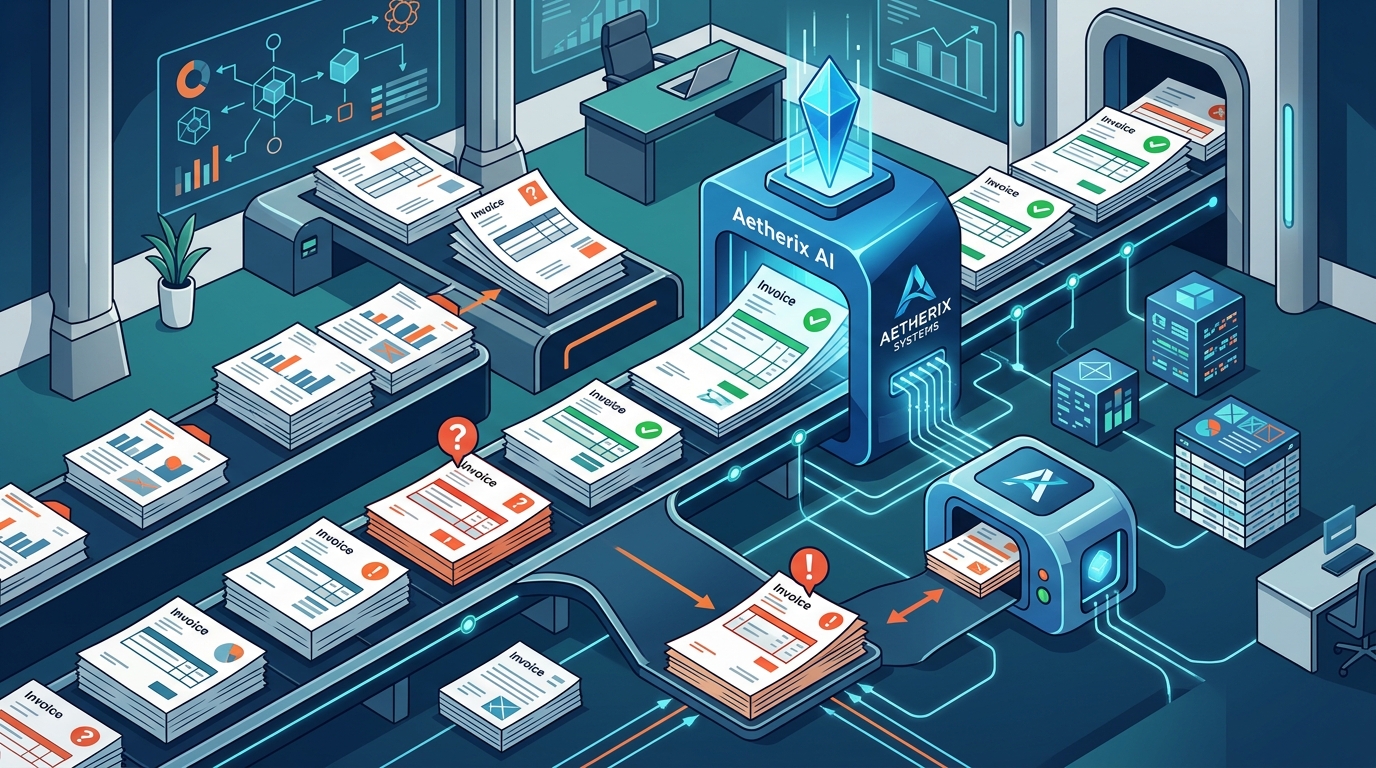
This approach fails to leverage the full potential of AI agents. Aetherix Systems handles exception handling for quantity variances and pricing differences by deploying specialized agents that investigate every break. These agents propose a resolution and attach the full reasoning, ensuring that the close comes back clean without human intervention for every minor discrepancy. By ignoring these exceptions, family offices lose weeks of operational efficiency.
For more details on our reconciliation workflow, visit our Reconciliation Operations page.
Mistake 2: Overlooking Intercompany Eliminations
Family offices often operate through multiple legal entities to manage assets, liabilities, and tax obligations. A critical mistake is failing to automate intercompany eliminations during the reconciliation process. When entities transact with each other, the books must reflect these internal movements accurately to avoid double-counting assets or revenues.
Without automated multi-entity netting, the reconciliation process becomes fragmented. Our agents handle intercompany eliminations and GL-to-subledger matching across your entire structure. This ensures that the consolidated financial statements are accurate and auditable. For a deeper understanding of our approach, read about How We Work.
Mistake 3: Neglecting Multi-Currency Reconciliation
Global family offices deal with multiple currencies, which introduces exchange rate volatility and timing gaps. A common error is using static exchange rates or ignoring the timing of transactions relative to rate fluctuations. This leads to mismatches between the custodian records and the book of record.
Our agents reconcile credit card feeds, vendor invoices, and expense reports against your general ledger, flagging duplicates and missing approvals. They also handle pricing discrepancies in investment reconciliation. By automating this process, you ensure that every transaction is valued correctly at the time of the event. Learn more about our Family Office Solutions.
Mistake 4: Failing to Automate Vendor Onboarding
Many family offices struggle with the onboarding of new vendors and suppliers. Manual onboarding processes are slow and prone to fraud, as they rely on human verification of bank details and tax IDs. This mistake creates a security gap that can be exploited by bad actors.
Automating vendor onboarding involves verifying bank details, tax IDs, and compliance documents through AI agents. This ensures that every new vendor is vetted before any transactions occur. Our platform integrates with tools like Bill.com and Ramp to streamline this process. See how our Platform & Teams can help.
Mistake 5: Disregarding Audit Trail Requirements
Compliance is non-negotiable for family offices. A major mistake is implementing automation that does not provide a full audit trail. Without a detailed record of every decision made by an AI agent, it is impossible to prove compliance during an audit.
Every step in our reconciliation process is logged. Every decision is explained. We maintain a full audit trail on every action, ensuring that your close is not only clean but also defensible. Our compliance framework includes SOC 2, GDPR, and UAE PDPL adherence. Read our Compliance page for more details.
Key Takeaways
- Three-Way Matching: Automated systems must handle exceptions, not just perfect matches, to avoid bottlenecks.
- Intercompany Eliminations: Multi-entity netting is essential for accurate consolidated financial statements.
- Multi-Currency: Real-time exchange rate application prevents valuation mismatches in global transactions.
- Vendor Onboarding: Automated vetting reduces fraud risk and speeds up supplier integration.
- Audit Trails: Full logging of AI decisions is critical for regulatory compliance and trust.
- Integration: Seamless connection with NetSuite, Sage Intacct, and QuickBooks is vital for data accuracy.
- Security: SOC 2 and GDPR compliance ensures data protection across all jurisdictions.
Frequently Asked Questions
What is invoice reconciliation?
Invoice reconciliation is the process of verifying that a vendor invoice matches the corresponding purchase order and goods receipt, ensuring accuracy before payment.
How does AI improve family office reconciliation?
AI agents automate the matching process, investigate exceptions, and propose resolutions, reducing manual effort and increasing accuracy.
What are the benefits of automated intercompany eliminations?
Automated eliminations ensure that internal transactions are correctly accounted for, preventing double-counting and ensuring accurate consolidated financials.
Is AI reconciliation compliant with regulations?
Yes, when implemented correctly, AI reconciliation can be fully compliant with SOC 2, GDPR, and other regulatory frameworks by maintaining full audit trails.
How long does it take to implement AI reconciliation?
Implementation time varies, but Aetherix Systems can have your agents live in production in weeks, not months.
What integrations does Aetherix support?
We integrate with NetSuite, Sage Intacct, QuickBooks, Microsoft Dynamics, Bill.com, Ramp, and more.
Can AI handle multi-currency transactions?
Yes, our agents are designed to handle multi-currency reconciliation, including exchange rate fluctuations and timing gaps.
What is the role of AI agents in reconciliation?
AI agents ingest data, match transactions, investigate breaks, and report results, providing a fully autonomous reconciliation process.
Ready to Automate Your Reconciliation?
Stop letting manual errors undermine your family office's financial integrity. Book a scoping call with Aetherix Systems today to see how our AI agents can transform your reconciliation operations. Visit our Contact Sales page to get started.