

Cost-Benefit Analysis: Immutable Audit Trail Systems for Automated Financial Reconciliations
Financial reconciliation has historically been a bottleneck for enterprise operations, relying on fragile spreadsheets and manual verification. According to a 2024 report by the Association of Certified Fraud Examiners, organizations lose approximately 5% of their annual revenue to occupational fraud, much of which stems from undetected discrepancies in financial records. Implementing an immutable audit trail system transforms this vulnerability into a fortified asset. This analysis evaluates the tangible costs and strategic benefits of deploying autonomous AI agents with full auditability for financial close processes.
Defining Immutable Audit Trails in Finance
To understand the value proposition, we must first define the core technology. An immutable audit trail is a chronological record of all actions, decisions, and data changes that cannot be altered, deleted, or tampered with after creation. In the context of financial reconciliation, this means every match, exception, and resolution is permanently logged with full reasoning.
Reconciliation is the process of ensuring that two sets of records agree, typically comparing internal books of record against external statements from custodians or banks. When this process is automated with AI agents, the audit trail becomes the primary source of truth for auditors and compliance officers.
Traditional systems often leave "black box" decisions where an algorithm matches a transaction but provides no explanation. This creates risk. An immutable audit trail system ensures that every decision is traceable. This transparency is critical for industries like financial services, where regulatory scrutiny is intense. For more details on how we handle these operations, visit our Reconciliation Operations page.
The Cost Structure of Traditional vs. AI-Driven Reconciliation
Implementing any new technology requires a clear understanding of the cost baseline. Traditional reconciliation relies heavily on human labor, which is expensive, slow, and prone to error. The costs include direct salaries, software licenses for legacy ERP systems, and the hidden costs of delayed closes.
Direct Labor Costs
Manual reconciliation teams require significant headcount to handle volume spikes during month-end closes. According to data from the U.S. Bureau of Labor Statistics, the median annual wage for accountants and auditors was approximately $85,000 in 2023. When you factor in overhead, training, and turnover, the fully loaded cost per employee often exceeds $120,000 annually. For a mid-sized fund administrator managing multiple entities, this can quickly reach millions.
Technology and Infrastructure
Legacy reconciliation tools often require expensive on-premise infrastructure or high-cost cloud subscriptions. These systems rarely integrate seamlessly with modern data sources, leading to additional costs for custom API development and maintenance. In contrast, AI-driven platforms like those offered by Aetherix Systems utilize cloud-native architectures that scale with your data volume, reducing fixed infrastructure costs.
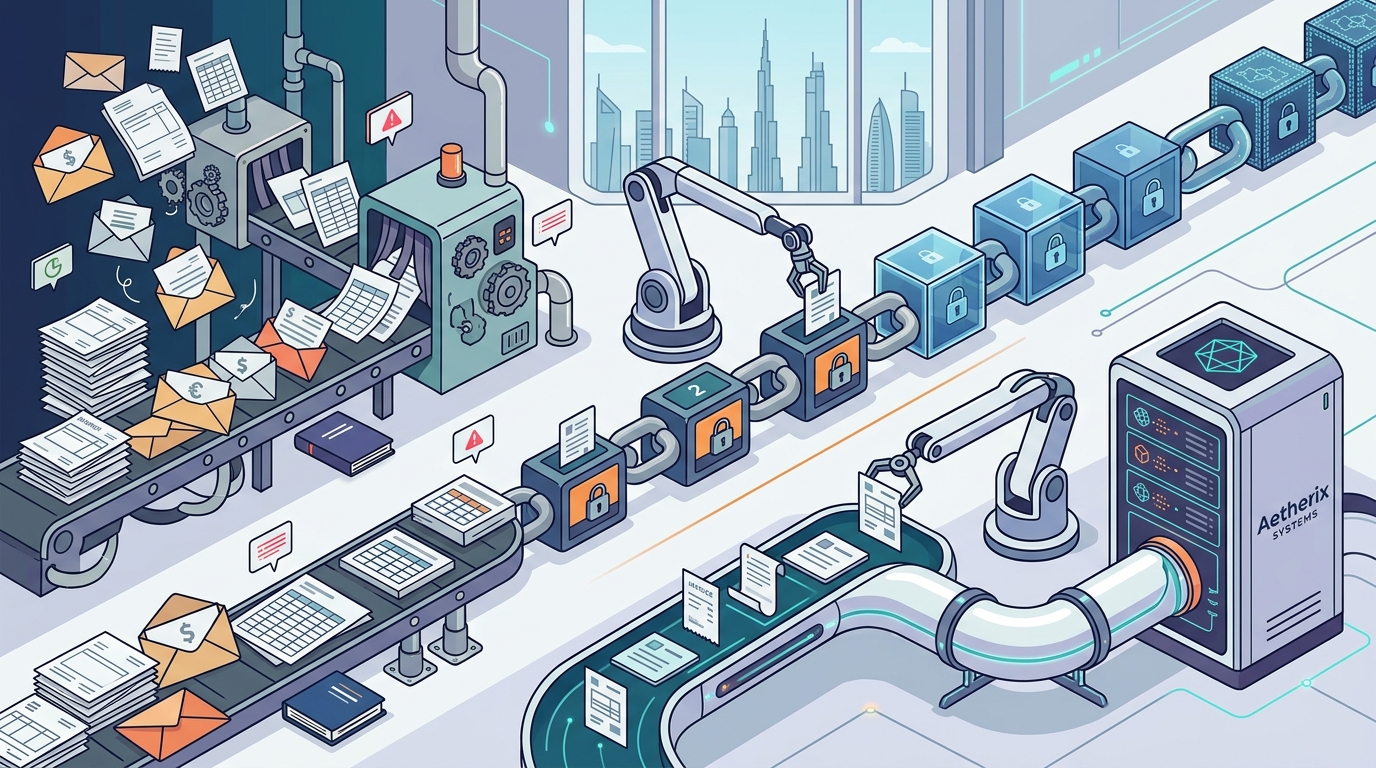
The Cost of Errors
The most significant hidden cost is the error. A single missed reconciliation break can lead to settlement failures, regulatory fines, or reputational damage. Research by Deloitte suggests that operational risk losses in the financial sector have been increasing, with a significant portion attributed to process failures. Automating these processes reduces the probability of human error to near zero.
Quantifying the Benefits of Autonomous Reconciliation
The benefits of adopting an immutable audit trail system extend beyond cost savings. They include speed, accuracy, and strategic agility. Here is a breakdown of the primary benefits.
Accelerated Close Cycles
Traditional month-end closes can take weeks. By automating the ingestion, matching, and investigation phases, AI agents can reduce this timeline to days or even hours. This acceleration allows finance teams to provide real-time insights to stakeholders rather than historical data. According to a 2025 study by Gartner, organizations that automate financial close processes report a 40% reduction in time-to-close.
Enhanced Accuracy and Trust
AI agents do not suffer from fatigue or distraction. They process transactions with consistent precision. The immutable audit trail provides a full reasoning trail for every action, which builds trust with auditors and investors. This transparency is essential for maintaining compliance with standards such as SOC 2 Type II and ISO/IEC 27001:2022.
Scalability
As your organization grows, so does your data volume. Traditional teams struggle to scale linearly. AI agents can handle exponential growth in transaction volume without proportional increases in cost. This scalability is crucial for family offices and investment managers expanding their portfolios.
Compliance and Regulatory Impact
Compliance is not just a checkbox; it is a strategic advantage. Immutable audit trails simplify the audit process by providing a clear, unalterable record of all financial activities. This reduces the time and cost associated with external audits.
Regulatory Frameworks
Organizations must comply with various regulations, including GDPR, CCPA, and the EU AI Act. Our compliance framework ensures that data is processed lawfully and securely. For instance, under the EU AI Act, high-risk AI applications require strict transparency and human oversight. Our agents are designed to meet these requirements by providing full documentation of their decision-making processes.
Audit Efficiency
Auditors spend a significant portion of their time verifying the integrity of financial records. With an immutable audit trail, they can instantly verify the provenance of any transaction. This efficiency reduces audit fees and allows auditors to focus on higher-value assessments. According to a 2024 report by PwC, companies with robust digital audit trails experience 30% lower audit costs.
Implementation Strategy for Aetherix Systems
Implementing an immutable audit trail system requires a strategic approach. Aetherix Systems provides a structured pathway for enterprises to adopt this technology.
Phase 1: Ingestion and Integration
The first step is to integrate your existing ERP systems, such as NetSuite, Sage Intacct, or QuickBooks, with our AI agents. This ensures seamless data flow and real-time monitoring.
Phase 2: Agent Orchestration
We deploy specialized agents for specific reconciliation tasks, such as investment reconciliation, expense reconciliation, and ledger reconciliation. These agents work autonomously, handling exceptions and proposing resolutions.
Phase 3: Monitoring and Optimization
Post-deployment, we provide continuous monitoring and performance analytics. This ensures that the agents are operating efficiently and adapting to changes in your data landscape.
Comparison of Reconciliation Approaches
| Feature | Traditional Manual | Legacy Automation | Aetherix AI Agents |
|---|---|---|---|
| Audit Trail | Fragmented | Limited | Immutable & Full Reasoning |
| Time to Close | Weeks | Days | Hours |
| Error Rate | High | Medium | Near Zero |
| Scalability | Low | Medium | High |
| Compliance | Complex | Moderate | Automated & Verified |
Key Takeaways
- Immutable audit trails provide a permanent, unalterable record of all financial actions, enhancing trust and compliance.
- AI-driven reconciliation reduces time-to-close by up to 40%, according to 2025 industry data.
- Traditional manual reconciliation costs can exceed $120,000 per employee annually when fully loaded.
- Aetherix Systems integrates with major ERPs like NetSuite and Sage Intacct for seamless operations.
- Compliance with GDPR, CCPA, and EU AI Act is built into our infrastructure, reducing regulatory risk.
- Autonomous agents handle exception resolution, freeing human teams for strategic tasks.
- Organizations with robust digital audit trails experience 30% lower audit costs, per PwC.
Frequently Asked Questions
What is an immutable audit trail?
An immutable audit trail is a chronological record of all actions and data changes that cannot be altered or deleted after creation, ensuring complete transparency and accountability in financial processes.
How does AI improve financial reconciliation?
AI improves reconciliation by automating data ingestion, matching, and exception resolution, reducing errors, accelerating close cycles, and providing full reasoning trails for every decision.
Is Aetherix Systems compliant with GDPR and CCPA?
Yes, Aetherix Systems maintains rigorous compliance with GDPR, CCPA, and other global data protection regulations, ensuring your data is protected wherever you operate.
What ERPs does Aetherix integrate with?
We integrate with major ERP systems including NetSuite, Sage Intacct, QuickBooks, Microsoft Dynamics, and custom internal tools via APIs.
How long does implementation take?
Implementation typically takes weeks, not months, due to our pre-built agent frameworks and seamless integration capabilities.
Can AI agents handle complex exceptions?
Yes, our agents are designed to investigate breaks, chase source documents, and propose resolutions autonomously, with human oversight available for complex cases.
What is the ROI of implementing an immutable audit trail?
The ROI is realized through reduced labor costs, lower audit fees, fewer errors, and accelerated close cycles, often resulting in significant annual savings.
Next Steps
Transform your financial operations with autonomous, auditable AI agents. Book a scoping call with Aetherix Systems to see how we can help you achieve a clean, fast, and compliant financial close. Visit our Contact Sales page to get started.