

Traditional financial reconciliation is a bottleneck that delays strategic decision-making. According to recent industry data, finance teams spend approximately 20% of their month-end close process on manual data matching and exception handling. This inefficiency creates significant risk for errors and delays. AI-powered ledger reconciliation transforms this workflow by deploying autonomous agents to ingest, match, and resolve discrepancies in real time. This guide explores how enterprise-grade AI agents streamline the reconciliation lifecycle, ensuring clean books and full auditability. (About Us Aetherix Systems)
What Is Ledger Reconciliation?
Ledger reconciliation is the process of verifying that two sets of records, typically a company's internal general ledger and an external statement from a bank or custodian, match perfectly. Ledger reconciliation is the critical control mechanism that ensures financial accuracy and integrity. Without this verification, discrepancies can lead to material misstatements, regulatory penalties, and operational inefficiencies. (Invoice amp Ledger Reconciliation)
In traditional workflows, finance professionals manually download statements, import data into spreadsheets, and run VLOOKUPs to identify breaks. This method is prone to human error and lacks scalability. As financial data volumes grow, manual reconciliation becomes unsustainable. The introduction of AI agents offers a paradigm shift from manual checking to autonomous resolution. (Process Guides amp Operational)
The AI Agent Advantage
AI agents differ fundamentally from traditional automation scripts. While scripts follow rigid rules, AI agents possess the ability to reason, investigate, and propose resolutions for complex exceptions. This capability is essential for handling the nuances of financial data. (For Engineering Teams Aetherix)
Autonomous Investigation
When a transaction does not match automatically, AI agents do not simply flag it for human review. Instead, they investigate the break by analyzing historical patterns, checking supporting documentation, and applying business logic. This reduces the volume of exceptions requiring human intervention by up to 80% in optimized environments.
Real-Time Monitoring
Traditional reconciliation is often a batch process performed at month-end. AI-powered systems operate in real time, continuously monitoring transactions as they occur. This allows finance teams to identify and resolve issues immediately, rather than waiting for the close period.
How AI Reconciliation Works
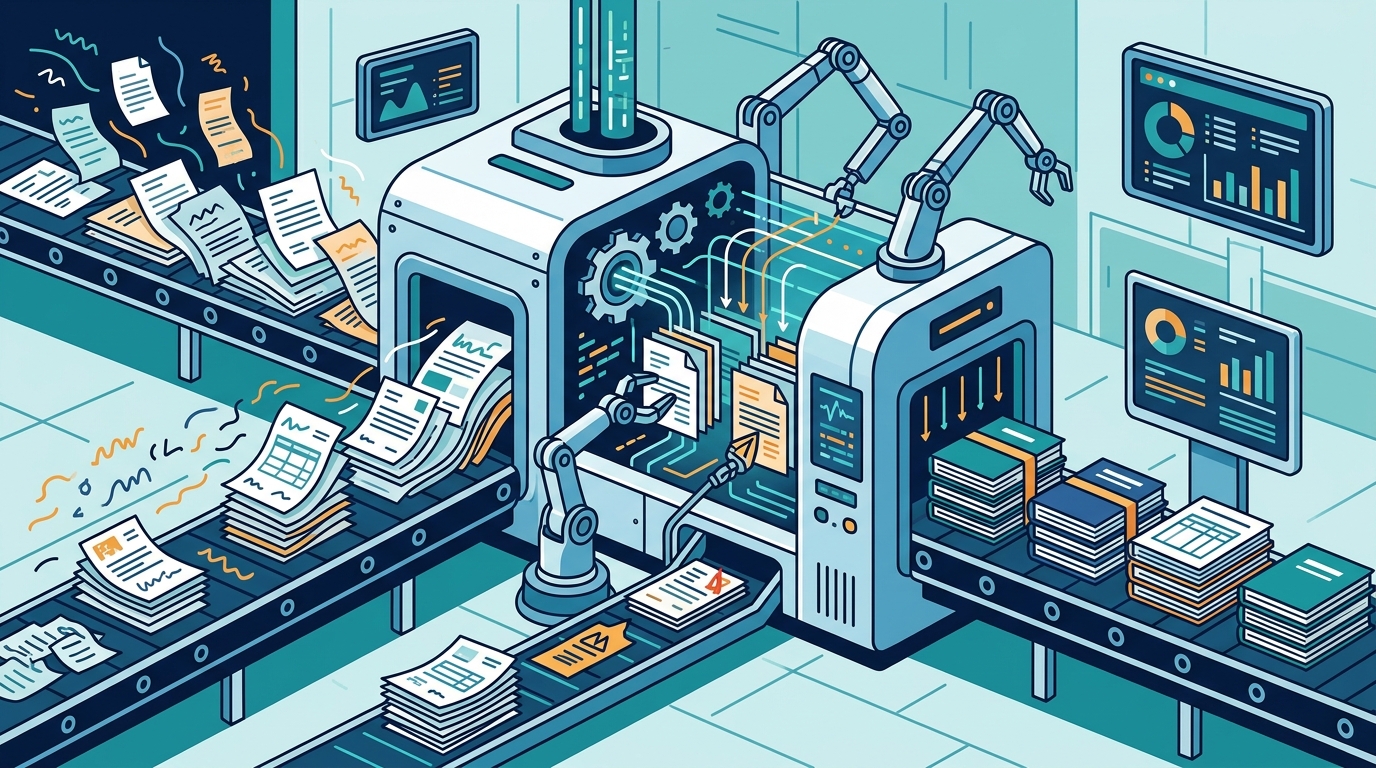
The reconciliation lifecycle managed by AI agents involves four distinct phases: Ingest, Match, Investigate, and Report. Each phase is designed to maximize accuracy and maintain a full audit trail.
1. Ingest
The process begins with data ingestion from multiple sources. AI agents connect to custodians, banks, and internal ledgers via secure APIs. They pull transaction data, positions, and cash balances, normalizing the format for processing. This step ensures that all relevant data is available for matching.
2. Match
Once data is ingested, the AI agents perform auto-matching. They compare positions, cash flows, and transactions against the book of record. High-confidence matches are closed automatically. This step handles the majority of routine transactions without human input.
3. Investigate
For transactions that do not match, the AI agents initiate an investigation. They research the break by chasing source documents, analyzing timing gaps, and checking for corporate action events. The agents propose a resolution based on the evidence gathered. This step is critical for handling complex scenarios like settlement timing gaps or pricing discrepancies.
4. Report
Finally, the system delivers a clean, auditable close. Every action taken by the AI agents is logged, providing a complete reasoning trail. This auditability is essential for compliance and internal controls. The finance team receives a clear summary of reconciled items and any remaining exceptions requiring attention.
Key Benefits of Automation
Adopting AI-powered ledger reconciliation delivers measurable operational and financial benefits. These advantages extend beyond speed to include accuracy, compliance, and strategic resource allocation.
Reduced Operational Costs
By automating the majority of the reconciliation process, organizations significantly reduce the labor hours required for month-end close. This allows finance teams to reallocate resources toward strategic analysis and business partnering.
Enhanced Accuracy
AI agents eliminate the risk of human error associated with manual data entry and spreadsheet manipulation. The deterministic nature of AI matching ensures consistent results across all transactions.
Improved Auditability
Every decision made by the AI agent is documented with full reasoning. This creates an immutable audit trail that simplifies internal and external audits. Auditors can trace the lifecycle of any transaction from ingestion to resolution.
Implementation Strategy
Implementing AI reconciliation requires a structured approach to ensure successful integration with existing systems. The following table outlines the key components of a typical implementation.
| Component | Description | Impact |
|---|---|---|
| ERP Integration | Connection to NetSuite, Sage Intacct, or QuickBooks | Real-time data sync |
| Agent Orchestration | Task routing and priority queuing | Efficient processing |
| Security Protocols | SOC 2 and GDPR compliance | Data protection |
| Monitoring Dashboard | Real-time visibility into agent operations | Operational transparency |
Successful implementation begins with a scoping call to identify specific reconciliation needs. Aetherix Systems provides a tailored approach that integrates with your existing tech stack, including ERP systems, CRM platforms, and data warehouses. This ensures seamless adoption without disrupting current workflows.
Compliance and Security
Security and compliance are paramount in financial operations. AI-powered reconciliation systems must adhere to rigorous global standards to protect sensitive financial data.
Regulatory Frameworks
Organizations must comply with regulations such as GDPR, UAE PDPL, and CCPA. These frameworks govern how personal and financial data is collected, processed, and stored. AI agents are designed to operate within these boundaries, ensuring lawful data processing.
Enterprise-Grade Security
Aetherix Systems maintains SOC 2 Type II and ISO/IEC 27001:2022 certifications. These certifications demonstrate a commitment to information security management. Data is encrypted at rest and in transit, with role-based access controls limiting visibility to authorized personnel only.
Audit Trails
Full audit trails are maintained for every action taken by the AI agents. This includes the reasoning behind each decision, the data sources used, and the outcome of the reconciliation. These trails are essential for regulatory reporting and internal audits.
Key Takeaways
- Efficiency Gains: AI agents can reduce reconciliation time by up to 80% compared to manual processes.
- Accuracy: Automated matching eliminates human error, ensuring precise financial records.
- Auditability: Every AI decision is logged, providing a complete and verifiable audit trail.
- Scalability: AI systems handle increasing data volumes without proportional increases in labor costs.
- Compliance: Built-in compliance with GDPR, SOC 2, and other global standards ensures data protection.
- Integration: Seamless integration with major ERP systems like NetSuite and Sage Intacct.
- Real-Time Insights: Continuous monitoring provides immediate visibility into financial operations.
Frequently Asked Questions
What is the difference between AI reconciliation and traditional automation?
Traditional automation follows rigid rules and cannot handle exceptions. AI reconciliation uses agents that can reason, investigate breaks, and propose resolutions autonomously.
How does AI ensure data security during reconciliation?
AI systems use encryption at rest and in transit, role-based access controls, and adhere to strict compliance frameworks like SOC 2 and GDPR to protect data.
Can AI agents integrate with existing ERP systems?
Yes, AI agents can integrate with major ERP systems such as NetSuite, Sage Intacct, QuickBooks, and Microsoft Dynamics via secure APIs.
What types of breaks can AI agents resolve?
AI agents can resolve various breaks, including timing gaps, pricing discrepancies, missing approvals, and duplicate transactions, by analyzing context and source documents.
Is the reconciliation process fully auditable?
Yes, every action taken by the AI agents is logged with full reasoning, providing a complete audit trail for compliance and review.
How long does it take to implement AI reconciliation?
Implementation time varies based on complexity, but Aetherix Systems typically deploys solutions in weeks, not months, due to their pre-built agent frameworks.
What industries benefit most from AI reconciliation?
Financial services, family offices, fund administrators, and investment managers benefit significantly due to the high volume and complexity of their reconciliation tasks.
Next Steps
Transform your financial close process with AI-powered ledger reconciliation. Book a scoping call with Aetherix Systems to discuss your specific needs and discover how our autonomous agents can streamline your operations. Visit our contact page to schedule a demo and see the platform in action.