

Evaluating and Selecting AI Ledger Reconciliation Platforms for Enterprise Use
Financial reconciliation has traditionally been a bottleneck in enterprise operations, consuming thousands of hours in manual data entry and error correction. Recent industry analysis indicates that organizations leveraging automated reconciliation solutions reduce processing time by up to 70% while significantly lowering the risk of financial leakage. As global transaction volumes continue to expand, the reliance on artificial intelligence to manage complex, multi-currency, and multi-platform ledgers has shifted from a competitive advantage to a fundamental operational necessity. This guide provides a rigorous framework for evaluating AI-driven reconciliation platforms, ensuring your enterprise selects a solution that aligns with strict compliance standards and scalability requirements.
Understanding AI Ledger Reconciliation
Traditional rule-based automation often fails when faced with the nuance of real-world financial data. AI ledger reconciliation utilizes machine learning algorithms to identify patterns, anomalies, and matches that static scripts cannot detect. AI ledger reconciliation is the automated process of matching financial records across disparate systems using machine learning to resolve discrepancies without human intervention. This technology reduces the cognitive load on finance teams, allowing them to focus on strategic analysis rather than data validation.
The evolution of this technology has been driven by the need for real-time visibility. Older systems processed data in batches, leading to delays in financial reporting. Modern AI platforms process transactions in near real-time, providing immediate insights into cash flow and liquidity. According to recent financial technology reports, companies that adopt real-time reconciliation see a 40% improvement in cash flow forecasting accuracy. This shift is critical for enterprises operating in volatile markets where timing impacts financial stability.
Furthermore, AI systems continuously learn from historical data. As the platform processes more transactions, its accuracy improves, reducing the need for manual overrides. This self-correcting mechanism ensures that the system remains effective even as business processes evolve. For more insights on the impact of automation in finance, you can explore resources from Forbes Tech Council which frequently highlights the transformative power of AI in financial operations. (About)
Core Evaluation Criteria
Selecting the right platform requires a multi-dimensional evaluation. It is not enough to look at price; you must assess technical robustness, scalability, and ease of use. The following criteria form the backbone of a successful vendor assessment.
1. Matching Accuracy and Confidence Scores
The primary metric for any reconciliation platform is its ability to correctly match transactions. Look for platforms that provide confidence scores for each match. High-confidence matches are auto-posted, while low-confidence matches are flagged for human review. This hybrid approach ensures efficiency without sacrificing control. A platform that claims 100% automation without human oversight is a significant risk, as edge cases will inevitably arise.
2. Handling of Unstructured Data
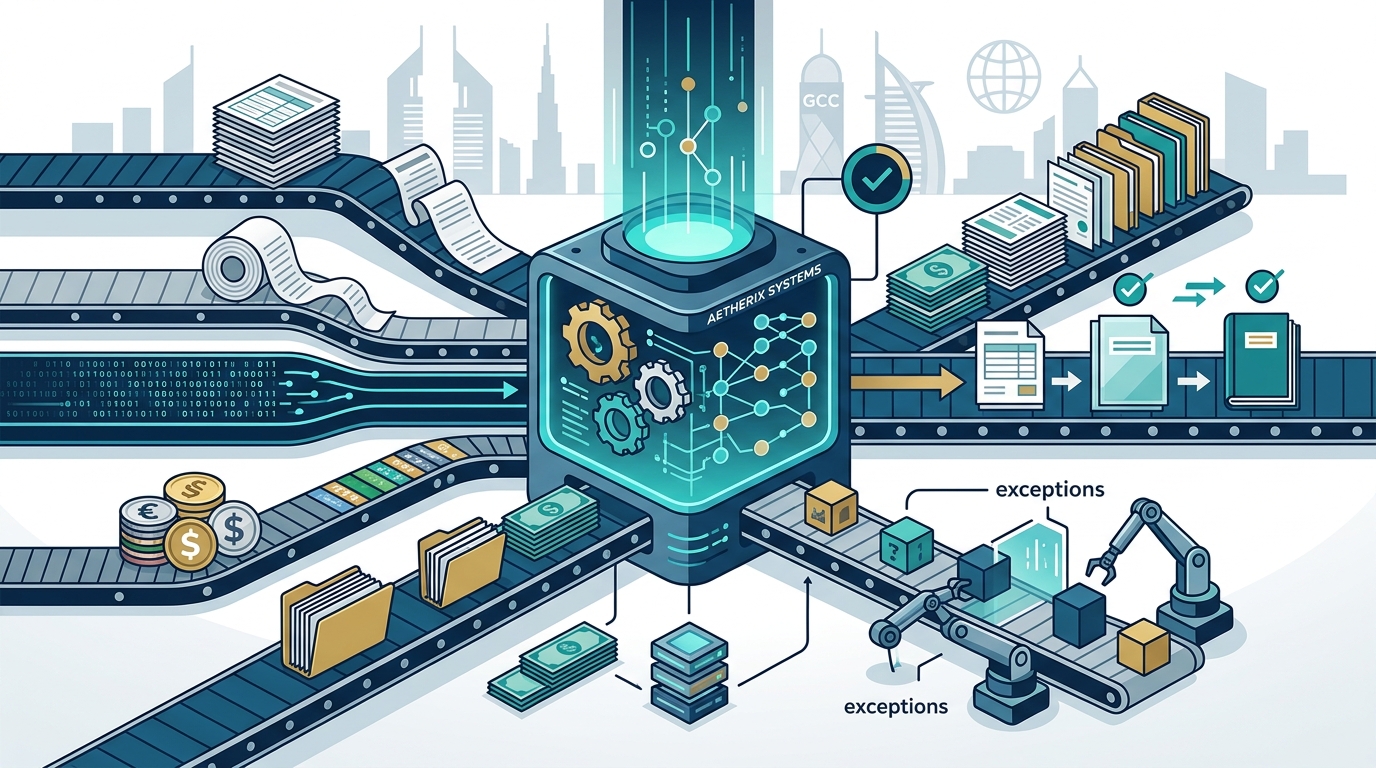
Enterprise finance is not limited to structured CSV files. Invoices, bank statements, and emails often contain unstructured data. Unstructured data processing is the capability of AI systems to extract and interpret financial information from non-tabular formats such as PDFs and emails. Evaluate how well the platform handles these formats. Does it use Optical Character Recognition (OCR) effectively? Can it parse complex invoice layouts? The ability to handle unstructured data reduces the need for pre-processing, saving significant time.
3. Scalability and Performance
As your transaction volume grows, the platform must scale without degradation in performance. Ask vendors about their processing limits and latency. Does the system slow down during peak periods? Enterprise-grade solutions should handle millions of transactions daily with consistent response times. Check Gartner Financial Advisory for independent assessments of scalability in financial technology stacks.
Integration Capabilities and Architecture
No reconciliation platform exists in a vacuum. It must integrate seamlessly with your existing ERP, banking APIs, and general ledger systems. A fragmented integration strategy leads to data silos and increased maintenance costs.
API-First Design
Prioritize platforms with robust, well-documented APIs. RESTful APIs allow for real-time data synchronization and custom workflow automation. Ensure the API supports webhooks for event-driven updates, so your systems are notified immediately when a reconciliation is complete or an exception occurs. This reduces the need for constant polling and improves overall system efficiency.
Pre-built Connectors
While APIs are essential, pre-built connectors for major ERPs like SAP, Oracle, and NetSuite can accelerate deployment. These connectors reduce the time-to-value by eliminating the need for custom development. However, be wary of vendors who rely solely on pre-built connectors. The ability to customize these connectors is crucial for handling unique business logic.
Data Latency and Frequency
Understand the data refresh frequency of the platform. Does it support daily, hourly, or real-time updates? For enterprises requiring real-time cash management, real-time integration is non-negotiable. According to data from PwC AI Analytics, real-time data integration is a key driver of operational resilience in modern finance departments.
Security and Compliance Standards
Financial data is highly sensitive. The security posture of the reconciliation platform is as important as its functional capabilities. Enterprises must ensure that any vendor they choose adheres to strict regulatory standards.
Data Encryption and Storage
Ensure that data is encrypted both in transit and at rest. Look for AES-256 encryption standards and secure key management practices. Understand where the data is stored. Does the vendor offer data residency options to comply with local regulations like GDPR in Europe or CCPA in California? Data sovereignty is a critical consideration for multinational enterprises.
Regulatory Compliance
The platform must support compliance with relevant financial regulations. This includes SOX (Sarbanes-Oxley) for internal controls, PCI-DSS for payment data, and ISO 27001 for information security management. Ask vendors for their latest audit reports and compliance certifications. A lack of transparency in this area is a major red flag.
Audit Trails and Governance
Every action taken by the AI system must be logged. Comprehensive audit trails are essential for regulatory reporting and internal investigations. The platform should provide a clear history of all matches, overrides, and manual interventions. This ensures accountability and facilitates easier audits. For more on governance frameworks, refer to ISO Standards which outline best practices for information security management.
Vendor Comparison Matrix
To assist in your evaluation, here is a comparative overview of key features typically found in leading enterprise reconciliation platforms. Note that specific feature availability may vary by tier and customization.
| Feature Category | Platform A (Legacy ERP Add-on) | Platform B (Cloud-Native AI) | Platform C (Specialized Fintech) |
|---|---|---|---|
| Matching Engine | Rule-based with limited ML | Advanced ML with confidence scoring | Hybrid ML/Rule-based |
| Integration Speed | Slow (Months) | Fast (Weeks) | Medium (Weeks) |
| Unstructured Data Support | Limited | High (OCR + NLP) | Medium |
| Real-time Processing | No | Yes | Yes |
| Compliance Certifications | SOC 2, ISO 27001 | SOC 2, ISO 27001, GDPR | SOC 2, PCI-DSS |
When evaluating these options, consider your specific organizational needs. For enterprises already deeply embedded in a specific ERP ecosystem, Platform A might offer lower friction. However, for organizations seeking agility and advanced AI capabilities, Platform B or C may be more suitable. Visit Aetherix Systems Financial AI Services to discuss how we can tailor a solution to your unique architecture.
Key Takeaways
- AI Driven Efficiency: AI reconciliation reduces processing time by up to 70%, freeing finance teams for strategic work.
- Confidence Scores are Critical: Always prioritize platforms that provide confidence scores to balance automation with human oversight.
- Unstructured Data Handling: The ability to process PDFs and emails via OCR and NLP is a key differentiator for modern platforms.
- Real-time Integration: Real-time data synchronization is essential for accurate cash flow forecasting and liquidity management.
- Security First: Ensure vendors hold SOC 2 and ISO 27001 certifications to protect sensitive financial data.
- Scalability Matters: Choose a cloud-native solution that can scale with your transaction volume without performance degradation.
- Vendor Ecosystem: Evaluate the vendor's integration capabilities with your existing ERP and banking systems to ensure seamless deployment.
Frequently Asked Questions
What is the difference between rule-based and AI-based reconciliation?
Rule-based reconciliation uses static, predefined criteria to match transactions, which can fail with complex or non-standard data. AI-based reconciliation uses machine learning to identify patterns and matches dynamically, offering higher accuracy and adaptability to new data types.
How long does it take to implement an AI reconciliation platform?
Implementation time varies based on complexity. Cloud-native platforms with pre-built connectors can be deployed in weeks, while custom integrations with legacy ERPs may take several months. Aetherix Systems typically facilitates faster deployments through our optimized integration frameworks.
Can AI reconciliation handle multi-currency transactions?
Yes, advanced AI platforms can handle multi-currency transactions by automatically applying exchange rates and accounting for foreign exchange gains or losses. This ensures accurate reconciliation across global operations.
What are the security risks associated with AI financial tools?
Key risks include data breaches and model bias. Mitigation involves choosing vendors with strong encryption, regular security audits, and transparent AI governance policies. Always ensure data residency requirements are met.
How does AI reconciliation impact audit processes?
AI reconciliation enhances audit processes by providing comprehensive, immutable audit trails for every transaction match and override. This reduces audit preparation time and increases the reliability of financial reporting.
Is human oversight still necessary?
Yes, human oversight remains crucial for handling exceptions and low-confidence matches. AI augments human capability rather than replacing it entirely, ensuring that complex edge cases are resolved correctly.
What is the typical ROI of implementing AI reconciliation?
ROI is typically realized through labor cost savings, reduced error-related financial losses, and improved cash flow management. Many enterprises see a full return on investment within 12 to 18 months of deployment.
Next Steps
Evaluating and selecting the right AI ledger reconciliation platform is a strategic decision that impacts your entire financial infrastructure. By focusing on matching accuracy, integration capabilities, and security compliance, you can choose a solution that drives efficiency and resilience. Aetherix Systems specializes in helping enterprises navigate this complex landscape. We provide tailored AI solutions that integrate seamlessly with your existing systems. Contact Aetherix Systems today to schedule a consultation and discover how we can optimize your financial operations.