

Common Mistakes in AI Ledger Reconciliation Implementation and Prevention Strategies
Enterprise financial operations are undergoing a radical transformation as organizations attempt to automate complex reconciliation workflows. According to recent industry analyses, financial institutions and family offices are increasingly turning to autonomous agents to handle the volume of daily transactions that overwhelm traditional manual processes. However, the transition from legacy systems to AI-driven reconciliation is fraught with technical and operational hurdles. Many organizations fail to achieve a clean close because they underestimate the complexity of data ingestion and exception handling. This guide outlines the critical pitfalls in AI ledger reconciliation and provides actionable prevention strategies to ensure enterprise-grade reliability. (About Us Aetherix Systems)
The Data Ingestion Trap
The foundation of any successful reconciliation engine is the quality and structure of the ingested data. A common mistake is assuming that all custodian feeds, bank statements, and ledger exports are standardized. In reality, data formats vary wildly across different asset classes and financial institutions. When AI agents attempt to parse unstructured or semi-structured data without robust normalization layers, the matching accuracy drops significantly. (Invoice amp Ledger Reconciliation)
Prevention Strategy: Implement a rigorous data normalization layer before the AI agents engage in matching. Ensure that your ingestion pipeline can handle diverse file formats, including CSV, XML, and SWIFT messages. Aetherix Systems addresses this by pulling data directly from custodians, banks, and ledgers, ensuring that the input is consistent before the auto-match phase begins. This reduces the noise that leads to false positives in transaction matching. (Process Guides amp Operational)
Audit Trail and Compliance Gaps
One of the most critical failures in AI implementation is the lack of a transparent decision-making process. Financial regulators and internal auditors require a complete history of every action taken during the reconciliation process. If an AI agent resolves a break in the ledger, it must explain why. Black-box AI models that provide results without reasoning are unacceptable in high-stakes financial environments. (NetSuite Account Reconciliation Services)
Prevention Strategy: Mandate that any AI solution provides a full audit trail on every action. This includes logging the reasoning behind every resolution, the source documents used, and the confidence score of the decision. Compliance frameworks such as SOC 2 Type II and ISO/IEC 27001:2022 require strict adherence to these logging standards. Aetherix Systems ensures that every step is logged and every decision is explained, maintaining a clear chain of custody for financial data. (For Engineering Teams Aetherix)
Integration Fragility with Legacy ERPs
Many organizations attempt to deploy AI agents without first assessing the compatibility of their existing tech stack. Legacy ERP systems often have outdated APIs or limited data export capabilities. When AI agents try to push resolved transactions back into systems like NetSuite, Sage Intacct, or QuickBooks, integration failures can occur, leading to data discrepancies and delayed financial closes.
Prevention Strategy: Conduct a thorough integration audit before deployment. Ensure that your AI platform supports real-time connectivity with your specific ERP and CRM platforms. Enterprise-grade integrations must handle error retries, data mapping, and schema validation automatically. Aetherix Systems connects to major platforms including NetSuite, Sage Intacct, QuickBooks, and Microsoft Dynamics, ensuring seamless data flow without manual intervention.
The Exception Handling Black Box
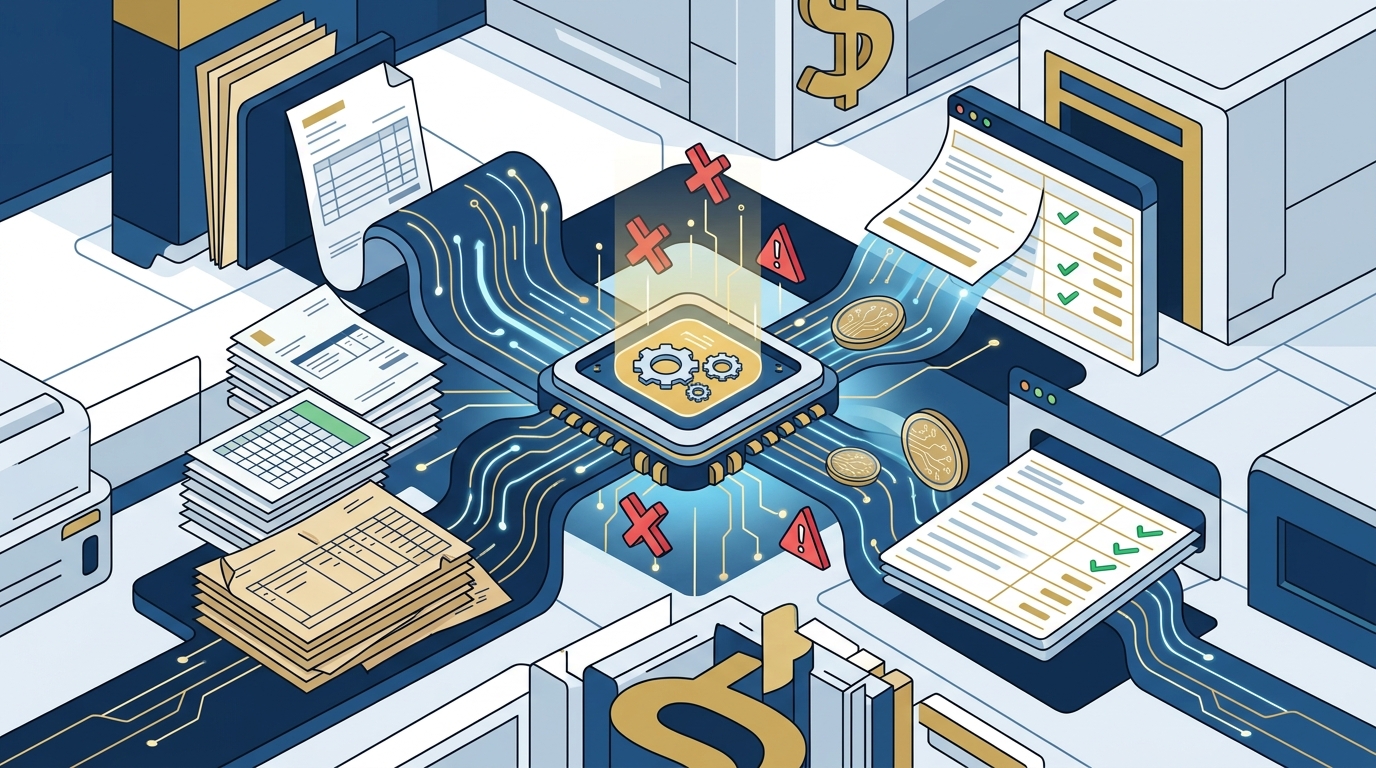
While AI excels at matching the majority of transactions, the true value lies in handling the exceptions. A common mistake is allowing the AI to ignore breaks or flag them for human review without context. This creates a bottleneck where human operators must spend hours investigating the same issues the AI could have resolved if given the right tools and context.
Prevention Strategy: Deploy specialized agents that investigate breaks, chase source documents, and propose resolutions autonomously. These agents should be able to research discrepancies and attach the full reasoning to the resolution. This approach not only speeds up the close process but also ensures that every break is addressed with enterprise-grade rigor. The goal is to deliver a clean, auditable close with minimal human oversight.
Security and Data Residency Risks
Data security is paramount when dealing with sensitive financial information. A significant mistake is deploying AI solutions that do not comply with global data protection regulations such as GDPR, CCPA, or the UAE PDPL. Additionally, data residency requirements may dictate where financial data can be stored and processed. Ignoring these requirements can lead to severe legal penalties and loss of client trust.
Prevention Strategy: Choose a provider that maintains rigorous compliance with global data protection regulations. Ensure that the AI solution offers data residency options that align with your operational regions. Aetherix Systems maintains compliance with GDPR, UAE PDPL, EU AI-ACT, HIPAA, and CCPA, ensuring that your data is protected wherever you operate. Their multi-jurisdictional approach guarantees that data sovereignty is respected.
Key Takeaways
- Data Normalization is Critical: Always normalize data from custodians and banks before AI matching to prevent ingestion errors.
- Audit Trails are Non-Negotiable: Every AI decision must be logged with full reasoning to satisfy SOC 2 and ISO compliance.
- Integration Compatibility: Verify API support for NetSuite, Sage Intacct, and QuickBooks before deployment to avoid integration failures.
- Autonomous Exception Handling: Use agents that investigate breaks and propose resolutions to reduce manual workload.
- Compliance First: Ensure your AI provider adheres to GDPR, CCPA, and local data residency laws like UAE PDPL.
- Enterprise Security: Look for SOC 2 Type II and ISO/IEC 27001:2022 certifications to ensure data protection.
- Real-Time Monitoring: Implement live visibility into agent operations to track task completion and accuracy.
Frequently Asked Questions
What is the primary benefit of AI in ledger reconciliation?
AI in ledger reconciliation automates the matching of transactions, identifies breaks, and proposes resolutions, significantly reducing the time required for the financial close process.
How does AI handle data security in financial operations?
AI solutions must implement encryption at rest and in transit, role-based access controls, and maintain compliance with standards like SOC 2 and GDPR to protect sensitive financial data.
Can AI agents integrate with legacy ERP systems?
Yes, modern AI agents can integrate with legacy ERP systems through robust API connections, provided the system supports data export and import functionalities.
What is the role of an audit trail in AI reconciliation?
An audit trail provides a complete record of every action taken by the AI, including the reasoning behind each decision, which is essential for regulatory compliance and internal audits.
How does Aetherix Systems ensure data residency compliance?
Aetherix Systems maintains data residency in multiple regions and adheres to local regulations such as UAE PDPL and GDPR, ensuring that data is stored and processed according to legal requirements.
What types of breaks can AI agents resolve?
AI agents can resolve various breaks, including corporate action discrepancies, settlement timing gaps, pricing differences, and duplicate transactions, by researching source documents and applying business rules.
Is human oversight still required in AI reconciliation?
While AI aims for autonomous operations, human oversight is often retained for high-risk exceptions and strategic decision-making, ensuring a balanced approach to automation.
What is the typical timeline for implementing AI reconciliation?
Implementation timelines vary, but with pre-built agent frameworks and enterprise integrations, organizations can often go live in weeks rather than months.
Next Steps for Autonomous Operations
Stop letting manual reconciliation processes delay your financial close. Transition to a workforce of AI agents that handle your reconciliation operations with enterprise-grade reliability. Book a scoping call with Aetherix Systems to see how our agents can transform your financial operations. Visit https://aetherixsystems.com/contact-sales to schedule your demo today.