

Audit Trail Errors in Automated Financial Reconciliations: Prevention Guide
Financial reconciliation is the backbone of corporate integrity, yet it remains one of the most vulnerable areas for operational failure. According to recent industry data, over 60% of financial close delays are attributed to manual reconciliation errors and broken audit trails. When automated systems fail to maintain a clear, immutable record of every transaction match, the result is not just delayed reporting, but significant compliance risk. This guide details the most common audit trail errors in automated financial reconciliations and provides actionable prevention strategies to ensure your close process is both clean and defensible. (About Us Aetherix Systems)
Understanding the Critical Role of Audit Trails
An audit trail is a chronological record that provides documentary evidence of the sequence of activities that have affected a specific operation, procedure, or event. In the context of financial reconciliation, it is not merely a log of successes, but a detailed map of every decision, exception, and resolution. Without a complete audit trail, an automated reconciliation engine is effectively a black box. Auditors cannot verify the accuracy of the close, and finance teams cannot troubleshoot discrepancies efficiently. (NetSuite Account Reconciliation Services)
The definition of a robust audit trail in enterprise finance is a system where every data point is linked to its source, every match is justified by algorithmic logic, and every exception is investigated with a recorded resolution path. This level of transparency is required by frameworks such as SOC 2 Type II and ISO/IEC 27001:2022, which mandate strict controls over data integrity and access. When reconciliation operations are run by AI agents, the audit trail must capture not just the outcome, but the reasoning behind every automated action. (For Engineering Teams Aetherix)
Top 5 Audit Trail Errors in Automation
Even the most sophisticated automated systems can suffer from audit trail degradation. These errors often stem from poor integration, lack of contextual data, or insufficient logging protocols. Below are the most frequent failures observed in enterprise reconciliation workflows.
1. Broken Data Lineage in Multi-System Ingestion
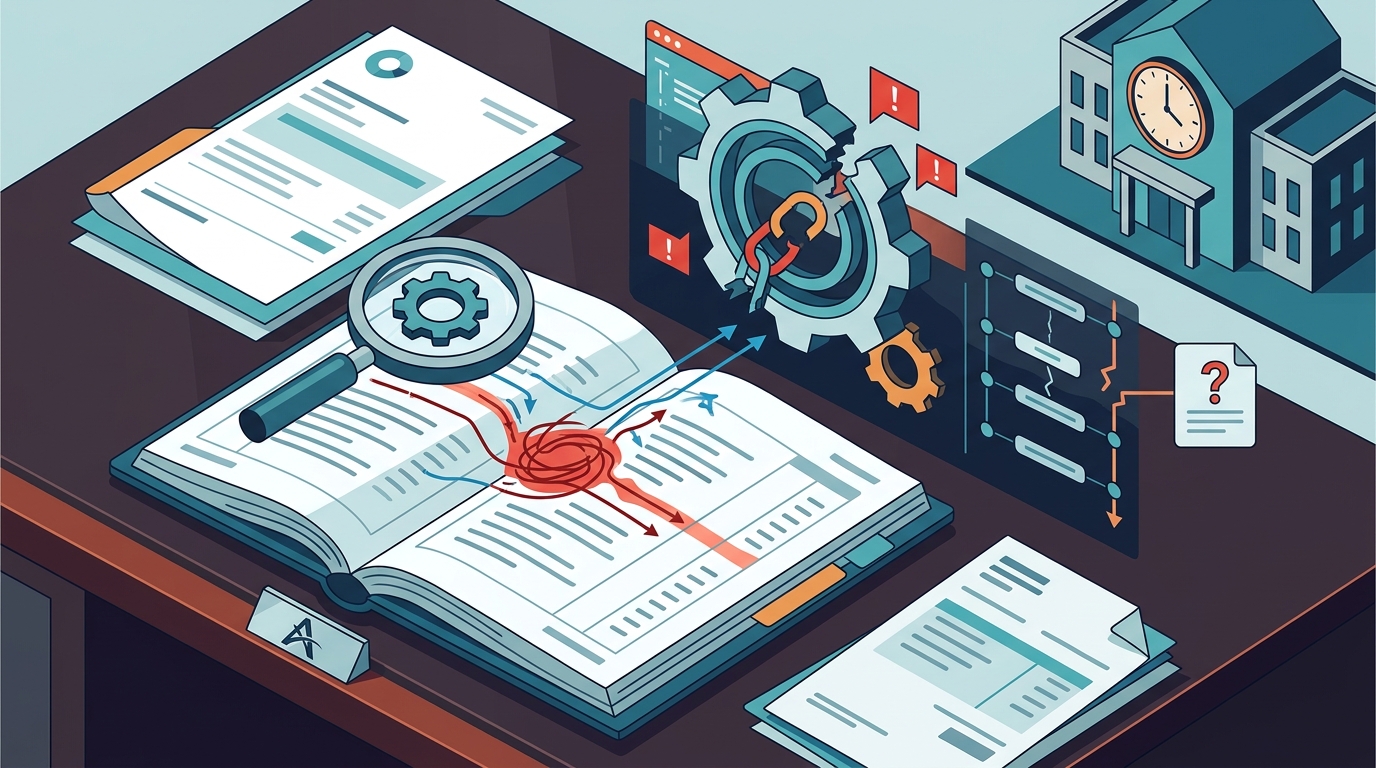
When data is pulled from multiple custodians, banks, and ledgers, the original source context is often lost during transformation. If the automated system fails to tag each record with its origin timestamp and source ID, the audit trail becomes fragmented. This makes it impossible to trace a discrepancy back to its root cause, whether it was a timing gap in settlement or a pricing error from the custodian.
2. Unexplained Exception Handling
Automated systems often flag breaks or mismatches but fail to document the investigation process. If an agent resolves a break by applying a standard rule without recording the specific rationale, the audit trail shows a "resolved" status but lacks the evidentiary support. Auditors require a clear explanation of why a break was closed, not just the fact that it was closed.
3. Lack of Version Control for Master Data
Master data, such as chart of accounts or vendor lists, changes over time. If the reconciliation engine does not maintain a versioned history of these references, historical reconciliations may become inconsistent. A transaction matched against a vendor ID that was later deprecated creates a gap in the audit trail, as the current system cannot explain the match logic used in the past.
4. Incomplete Logging of Agent Decisions
In AI-driven environments, the decision-making process of the agent must be fully logged. If the system uses a probabilistic model to match transactions, the confidence score and the alternative options considered should be part of the audit record. Without this, the system appears opaque, and compliance teams cannot verify that the agent did not hallucinate or misapply a rule.
5. Siloed Integration Logs
When integrations with ERP systems like NetSuite, Sage Intacct, or Microsoft Dynamics are managed separately from the reconciliation platform, the audit trail is split. A finance team might see the reconciliation result in one tool and the general ledger entry in another, with no unified link between them. This siloing creates gaps that auditors will flag as control deficiencies.
Prevention Strategies for Robust Reconciliation
Preventing these errors requires a proactive approach to system design and ongoing monitoring. The following strategies ensure that your audit trail remains intact, accurate, and compliant.
Implement Full-Stack Logging
Every step of the reconciliation lifecycle must be logged. This includes data ingestion, matching logic, exception investigation, and final reporting. Each log entry should include a unique transaction ID, timestamp, user or agent ID, and the specific action taken. This creates a continuous chain of custody for every financial record.
Use Immutable Ledger Technology
Storing audit trails on an immutable ledger or using write-once-read-many (WORM) storage ensures that records cannot be altered or deleted. This is critical for maintaining the integrity of the audit trail in the event of a dispute or regulatory inquiry. It provides a single source of truth that is resistant to tampering.
Enforce Human-in-the-Loop for Exceptions
While automation handles the majority of matches, exceptions require human oversight. Ensure that every exception resolution is documented with a clear rationale and approved by a designated authority. This not only improves the quality of the close but also adds a layer of accountability to the audit trail.
Regular Compliance Audits
Conduct regular internal and external audits of your reconciliation processes. These audits should specifically test the completeness and accuracy of the audit trail. Look for gaps in data lineage, unexplained exceptions, and inconsistent logging practices. Addressing these issues proactively prevents them from becoming systemic failures.
Integrate with Enterprise Systems Seamlessly
Ensure that your reconciliation platform integrates deeply with your existing ERP and financial systems. This allows for real-time synchronization of data and audit logs, eliminating silos and ensuring that the audit trail is unified across all platforms. Look for platforms that support native integrations with tools like NetSuite, Sage Intacct, and QuickBooks.
Manual vs. AI-Driven Reconciliation
Understanding the differences between manual and AI-driven reconciliation helps clarify why audit trail integrity is more critical than ever. While manual processes are prone to human error and lack of scalability, AI-driven systems offer speed and accuracy but require rigorous governance to maintain trust.
| Feature | Manual Reconciliation | AI-Driven Reconciliation |
|---|---|---|
| Audit Trail Completeness | Often fragmented, relying on individual spreadsheets and emails. | Comprehensive, automated, and immutable by design. |
| Error Detection | Reactive, often discovered after the close. | Proactive, with real-time monitoring and exception handling. |
| Scalability | Low, limited by human capacity and time. | High, capable of processing millions of transactions daily. |
| Compliance Readiness | Difficult to demonstrate consistent compliance. | Native alignment with SOC 2, GDPR, and ISO standards. |
| Resolution Speed | Days to weeks for complex breaks. | Minutes to hours, with automated resolution proposals. |
Key Takeaways
- A complete audit trail is essential for compliance with SOC 2 Type II and ISO/IEC 27001:2022 standards.
- Broken data lineage is a primary cause of audit failures in multi-system environments.
- Unexplained exception handling undermines the defensibility of the financial close.
- AI-driven reconciliation offers superior scalability but requires strict governance to maintain trust.
- Immutable logging ensures that audit records cannot be altered or deleted.
- Human-in-the-loop oversight is critical for resolving complex exceptions.
- Seamless integration with ERP systems like NetSuite and Sage Intacct prevents data silos.
Frequently Asked Questions
What is an audit trail in financial reconciliation?
An audit trail is a chronological record that provides documentary evidence of the sequence of activities that have affected a specific operation, procedure, or event. In reconciliation, it tracks every match, exception, and resolution.
Why are audit trails important for compliance?
Audit trails are required by regulatory frameworks such as SOC 2, GDPR, and HIPAA to ensure data integrity and accountability. They provide the evidence needed to verify that financial processes are secure and accurate.
How can AI agents improve audit trail integrity?
AI agents can automate the logging of every decision and action, ensuring that no step is missed. They can also provide detailed reasoning for each match, making the audit trail more transparent and defensible.
What are the risks of a broken audit trail?
A broken audit trail can lead to compliance failures, inability to troubleshoot errors, and loss of trust from auditors and stakeholders. It can also result in financial penalties and reputational damage.
How do I ensure my reconciliation platform has a robust audit trail?
Look for platforms that offer full-stack logging, immutable storage, and seamless integration with your ERP systems. Ensure that the platform provides detailed exception handling logs and supports human-in-the-loop oversight.
Can automated reconciliation handle complex exceptions?
Yes, advanced AI-driven systems can handle complex exceptions by investigating breaks, chasing source documents, and proposing resolutions. However, human oversight is often required for final approval.
What is the role of data lineage in reconciliation?
Data lineage tracks the origin and transformation of data throughout its lifecycle. In reconciliation, it ensures that every record can be traced back to its source, which is critical for verifying accuracy and integrity.
How often should I audit my reconciliation processes?
Regular audits, such as quarterly or annually, are recommended to ensure that your reconciliation processes remain compliant and effective. More frequent audits may be necessary for high-risk environments.
Secure Your Reconciliation Process
Don't let audit trail errors compromise your financial close. Aetherix Systems provides enterprise-grade AI agents that ensure every reconciliation step is fully auditable and compliant. Our agents handle the full lifecycle, from data ingestion to exception resolution, providing you with clean, defensible results. Book a scoping call today to learn how we can transform your reconciliation operations.