

Common Pitfalls in Implementing Automated Ledger Matching Solutions for Investment Funds
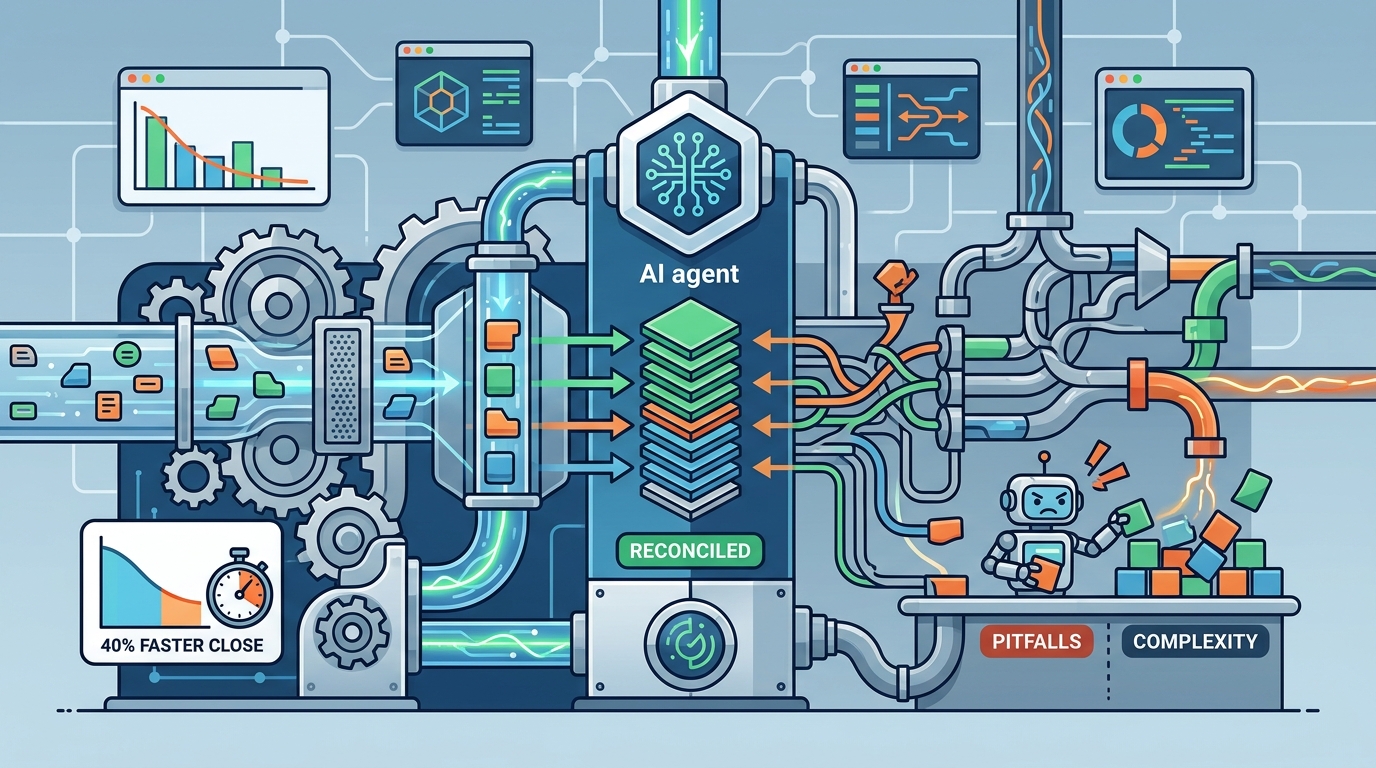
Automated ledger matching is no longer a luxury for investment funds; it is a critical operational necessity. According to recent industry data, financial institutions that adopt autonomous reconciliation agents reduce their close times by up to 40% compared to traditional manual processes. However, the path to full automation is fraught with technical and operational hurdles. Many fund administrators and family offices struggle to bridge the gap between legacy infrastructure and modern AI-driven workflows. This guide explores the most common pitfalls in implementing automated ledger matching solutions and provides actionable strategies to ensure a successful deployment. (About Us Aetherix Systems)
The Data Ingestion Bottleneck
The first and most critical phase of any reconciliation workflow is data ingestion. Investment funds receive data from multiple custodians, banks, and transfer agents. Each source often uses different file formats, naming conventions, and update frequencies. When implementing automated solutions, teams frequently underestimate the complexity of normalizing this disparate data. (Invoice amp Ledger Reconciliation)
Standardization is the key to successful ingestion. Without a robust normalization layer, your automated agents will fail to match transactions accurately. Aetherix Systems addresses this by pulling data directly from custodians, banks, and ledgers into a unified structure. This ensures that the matching engine receives clean, consistent data, reducing the likelihood of false breaks. (Process Guides amp Operational)
Another common pitfall is relying on static file transfers. Modern reconciliation requires real-time or near-real-time data feeds. Delayed data ingestion leads to stale positions and inaccurate net asset value (NAV) calculations. By integrating with platforms like NetSuite or Sage Intacct, funds can ensure that their ledger data is always current and aligned with custodian records. (NetSuite Account Reconciliation Services)
Exception Handling and Break Resolution
Automated matching engines are excellent at handling the 80% of transactions that match perfectly. However, the remaining 20% of breaks require human intervention. Traditional systems often flag these breaks without context, forcing analysts to manually investigate each one. This defeats the purpose of automation and creates a new bottleneck. (For Engineering Teams Aetherix)
The solution lies in intelligent exception handling. AI agents should not just flag breaks; they should investigate them. This involves researching source documents, chasing missing approvals, and proposing resolutions based on historical patterns. When agents propose a resolution, they attach the full reasoning trail, allowing human reviewers to validate the decision quickly.
This approach transforms the reconciliation process from a reactive task into a proactive operation. By automating the investigation phase, funds can significantly reduce the time spent on break resolution. This is particularly important for family offices and multi-entity structures where intercompany eliminations and netting add layers of complexity to the matching process.
The Audit Trail Imperative
In the financial services industry, every action must be traceable. Regulators and auditors require a complete history of how a reconciliation was performed. Many automated solutions fail to provide a granular audit trail, making it difficult to prove compliance during an audit.
A full audit trail is non-negotiable for enterprise-grade reconciliation. Every decision made by an AI agent must be logged, including the data inputs, the logic applied, and the outcome. This ensures that the close is not only clean but also defensible. Aetherix Systems maintains a full audit trail on every action, ensuring that your reconciliation operations are transparent and compliant.
Without a detailed audit trail, funds risk regulatory penalties and reputational damage. It is essential to choose a solution that prioritizes transparency and accountability. This includes role-based access controls, encryption at rest and in transit, and regular compliance audits aligned with global standards.
Integration Complexity with Legacy ERPs
Many investment funds operate on legacy ERP systems that were not designed for modern AI integration. Attempting to force-fit new automation tools into these systems often leads to technical debt and operational instability. The pitfall here is assuming that API connectivity is sufficient for seamless integration.
True integration requires a deep understanding of the fund's specific workflow. This includes handling multi-entity netting, intercompany eliminations, and complex corporate actions. Aetherix Systems specializes in designing multi-agent architectures tailored to these specific workflows. Each agent has a defined role and clear decision boundaries, ensuring safe and predictable behavior.
Furthermore, integration should not be a one-time setup. Continuous monitoring and optimization are required to ensure that the agents are performing as expected. This includes tracking task completion rates, accuracy metrics, and operational efficiency. By leveraging performance analytics, funds can identify areas for improvement and make data-driven decisions to enhance their reconciliation processes.
Security and Compliance Frameworks
Data security is paramount when dealing with sensitive financial information. Investment funds must comply with a variety of regulations, including GDPR, HIPAA, and SOC 2 Type II. Many organizations overlook the importance of compliance in their automation strategy, leading to significant risks.
Compliance must be embedded into the design of your automation solution. This includes implementing data residency controls, privacy by design principles, and regular risk assessments. Aetherix Systems maintains rigorous compliance with global data protection regulations, ensuring that your data is protected wherever you operate.
Additionally, the rise of AI governance frameworks, such as the EU AI Act, adds another layer of complexity. Funds must ensure that their AI agents are transparent, explainable, and subject to human oversight. This is not just a regulatory requirement but also a best practice for building trust with investors and stakeholders.
Key Takeaways
- Data Normalization is Critical: Standardizing data from multiple custodians reduces false breaks and improves matching accuracy.
- Intelligent Exception Handling: AI agents should investigate breaks and propose resolutions, not just flag them.
- Audit Trails are Essential: Every action must be logged to ensure regulatory compliance and defensibility.
- Integration Requires Depth: Seamless integration with legacy ERPs requires tailored multi-agent architectures.
- Compliance is Non-Negotiable: Adherence to GDPR, SOC 2, and other frameworks is mandatory for enterprise-grade solutions.
- Real-Time Monitoring: Continuous performance analytics help identify and resolve operational inefficiencies.
- Human-in-the-Loop: Maintaining human oversight ensures accountability and trust in AI-driven decisions.
Frequently Asked Questions
What is automated ledger matching?
Automated ledger matching is the process of using AI agents to automatically reconcile financial transactions between different ledgers, such as custodian records and internal books of record.
How do AI agents handle reconciliation breaks?
AI agents investigate breaks by researching source documents, chasing missing approvals, and proposing resolutions based on historical patterns and predefined rules.
Is automated reconciliation compliant with regulations?
Yes, when implemented correctly, automated reconciliation can meet strict regulatory requirements such as GDPR, SOC 2, and HIPAA by maintaining full audit trails and data security.
What are the benefits of using AI agents for reconciliation?
Benefits include reduced close times, improved accuracy, lower operational costs, and enhanced scalability for handling complex multi-entity structures.
How does Aetherix Systems ensure data security?
Aetherix Systems employs enterprise-grade security measures, including encryption at rest and in transit, role-based access, and compliance with global standards like SOC 2 and ISO 27001.
Can AI agents integrate with legacy ERP systems?
Yes, AI agents can be designed to integrate with legacy ERP systems through custom APIs and event-driven architectures, ensuring seamless data flow.
What is the role of human oversight in automated reconciliation?
Human oversight ensures that AI decisions are validated, provides accountability, and handles edge cases that require nuanced judgment beyond automated logic.
Next Steps for Your Fund
Implementing automated ledger matching is a transformative step for any investment fund. By avoiding common pitfalls and leveraging the right technology, you can achieve a clean, auditable close with unprecedented efficiency. Aetherix Systems is ready to help you navigate this transition. Contact our sales team to discuss your specific needs and schedule a demo of our AI-driven reconciliation platform.