

Essential Criteria for Evaluating AI Invoice Reconciliation Solutions in 2026
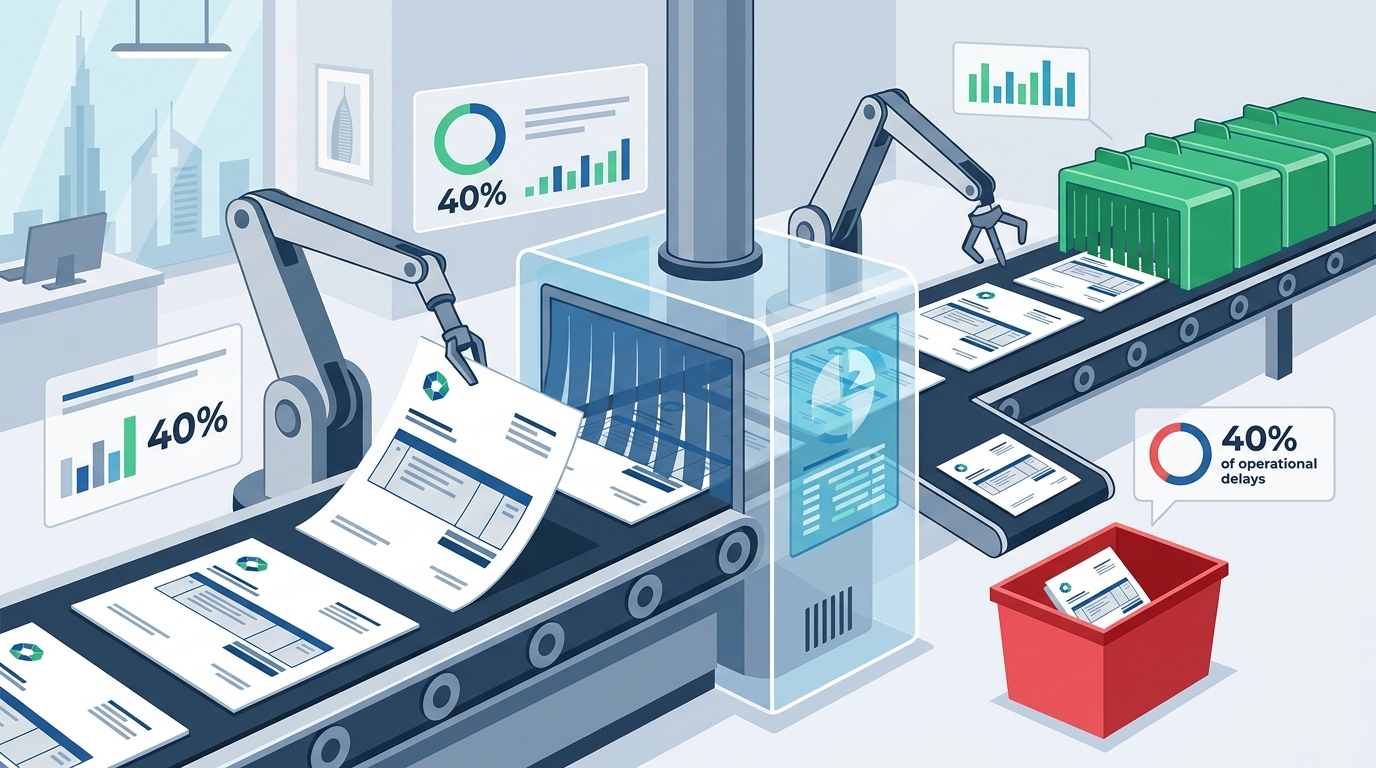
Investment funds face an escalating operational crisis as transaction volumes surge. According to recent industry data, manual reconciliation processes are responsible for over 40% of operational delays in fund administration, costing firms millions in labor and error correction annually. As the financial landscape shifts toward autonomous operations, the ability to evaluate AI-driven reconciliation platforms has become a critical competency for operations leaders. This guide outlines the definitive criteria for selecting a solution that ensures accuracy, compliance, and scalability. (About Us Aetherix Systems)
Why AI Reconciliation is Critical for Investment Funds
Traditional rule-based automation fails when faced with the complexity of modern financial instruments. Invoice reconciliation is the process of verifying that financial records match supporting documentation, such as purchase orders and goods receipts. In investment funds, this extends to custodian positions, cash flows, and corporate actions. (Process Guides amp Operational)
AI agents differ fundamentally from standard software bots. They do not just follow scripts; they investigate breaks. When a transaction does not match, an AI agent can research the discrepancy, chase source documents, and propose a resolution based on historical context. This capability reduces the close cycle from weeks to days. (NetSuite Account Reconciliation Services)
For family offices and fund administrators, the volume of data is growing exponentially. A study by the Association for Financial Professionals indicates that organizations using AI for financial operations see a 30% reduction in processing time. This efficiency allows teams to focus on strategic analysis rather than data entry. (For Engineering Teams Aetherix)
The Non-Negotiable Audit Trail
In the financial sector, trust is built on transparency. Any AI solution must provide a full audit trail on every action. This means that for every decision made by an agent, there must be a logged record of the reasoning, the data sources used, and the outcome.
Without a complete audit trail, regulatory bodies cannot verify the integrity of the fund's NAV (Net Asset Value). Full audit trail means every agent action is logged, explained, and verifiable. This is not just a technical feature; it is a compliance requirement.
When evaluating vendors, ask for a demo of the audit interface. Can you click on a resolved break and see the exact steps the agent took? Can you see the confidence score of the decision? If the answer is no, the solution is not ready for enterprise use.
Integration with Custodians and ERPs
AI agents must live in production. They cannot operate in isolated silos. The ability to ingest data directly from custodians, banks, and ledgers is paramount. Look for solutions that offer pre-built connectors for major platforms.
Key integrations include:
- ERP Systems: NetSuite, Sage Intacct, QuickBooks, and Microsoft Dynamics.
- Expense Platforms: Bill.com and Ramp for expense reconciliation.
- Custodian Feeds: Direct API access to major prime brokers and custodians.
Seamless integration ensures that data is pulled in real-time, reducing the latency between transaction occurrence and reconciliation. This real-time visibility is crucial for maintaining accurate cash positions and preventing settlement failures.
Security and Regulatory Compliance
Financial data is highly sensitive. Any AI provider must adhere to rigorous security standards. SOC 2 Type II compliance is the baseline for enterprise software security. This certification validates that the provider has effective controls in place for security, availability, processing integrity, confidentiality, and privacy.
Beyond SOC 2, look for compliance with global data protection regulations. This includes GDPR for European data, CCPA for California residents, and local regulations like the UAE PDPL. Data residency is also critical; ensure the provider can host data in specific geographic regions to meet legal requirements.
Encryption is another key factor. Data should be encrypted at rest using AES-256 and in transit using TLS 1.3. Role-based access control ensures that only authorized personnel can view sensitive financial data.
Agent Orchestration vs. Simple Automation
Not all AI is created equal. Many vendors use the term "AI" to describe simple robotic process automation (RPA). True AI involves multi-agent orchestration, where specialized agents collaborate to solve complex problems.
In a multi-agent system, one agent might ingest data, another might match transactions, and a third might investigate exceptions. This division of labor allows for greater accuracy and scalability. Agent orchestration is the coordination of multiple AI agents to complete complex workflows.
When evaluating a solution, ask about the architecture. Does it use a single model for all tasks, or does it employ a team of specialized agents? Specialized agents can be fine-tuned for specific tasks, such as expense reconciliation or investment position matching, leading to higher accuracy.
Comparing Reconciliation Approaches
Understanding the different approaches to reconciliation helps in making an informed decision. The table below summarizes the key differences.
| Approach | Accuracy | Scalability | Auditability | Best For |
|---|---|---|---|---|
| Manual Reconciliation | Low (Human Error) | Low | High (Paper Trail) | Small, simple portfolios |
| Rule-Based Automation | Medium | Medium | Medium | Standard, repetitive transactions |
| AI Agent Reconciliation | High (Self-Correcting) | High | High (Full Reasoning) | Complex, high-volume funds |
As shown, AI agent reconciliation offers the best balance of accuracy and scalability for investment funds. It handles the exceptions that rule-based systems miss, ensuring a clean close.
Key Takeaways
- Auditability is Key: Ensure every agent action is logged with full reasoning for compliance.
- Integration Matters: Choose a platform that integrates with your existing ERP and custodian systems.
- Security First: Verify SOC 2 Type II and GDPR compliance before signing any contracts.
- Agent Orchestration: Prefer multi-agent systems over single-model solutions for complex tasks.
- Real-Time Monitoring: Look for live dashboards that provide visibility into agent operations.
- Scalability: Ensure the solution can handle growth in transaction volume without performance degradation.
- Industry Expertise: Choose a provider with deep experience in financial services and fund administration.
Frequently Asked Questions
What is the difference between AI reconciliation and traditional automation?
Traditional automation follows fixed rules and fails when exceptions occur. AI reconciliation uses agents that can investigate breaks, research source documents, and propose resolutions, handling exceptions autonomously.
How does AI ensure data security in reconciliation?
AI providers use encryption at rest and in transit, role-based access control, and maintain compliance with standards like SOC 2 and GDPR to protect sensitive financial data.
Can AI agents integrate with NetSuite and other ERPs?
Yes, modern AI reconciliation platforms offer pre-built integrations with major ERPs like NetSuite, Sage Intacct, and Microsoft Dynamics, as well as expense platforms like Bill.com.
What is an audit trail in AI reconciliation?
An audit trail is a complete record of every action taken by an AI agent, including the reasoning behind decisions, the data sources used, and the final outcome, ensuring transparency and compliance.
How long does it take to implement an AI reconciliation solution?
Implementation times vary, but many providers offer rapid deployment, with some solutions going live in weeks rather than months, thanks to pre-built connectors and agent templates.
Is AI reconciliation suitable for family offices?
Yes, AI reconciliation is ideal for family offices managing multiple entities and asset classes, as it automates complex matching tasks and provides clear visibility across all accounts.
What are the benefits of multi-agent orchestration?
Multi-agent orchestration allows specialized agents to collaborate on complex workflows, improving accuracy, scalability, and the ability to handle edge cases that single models might miss.
How does AI handle corporate action breaks?
AI agents can automatically match custodian positions against the book of record, identifying and resolving corporate action breaks, settlement timing gaps, and pricing discrepancies without manual intervention.
Next Steps for Your Fund
Evaluating AI invoice reconciliation solutions is a critical step toward operational excellence. By focusing on auditability, integration, security, and agent orchestration, you can select a platform that drives efficiency and compliance. Aetherix Systems offers enterprise-grade AI agents designed specifically for investment funds and financial institutions. Book a scoping call today to see how our agents can transform your reconciliation operations.