

AI reconciliation services categorize mismatches by analyzing data attributes, transaction context, and historical patterns to assign specific exception types. This structured approach allows finance teams to route issues to the correct workflow, reducing manual triage time and improving resolution accuracy. Aetherix Systems builds these categorization engines to handle complex financial data across the GCC and global markets. For additional details, review the aetherixsystems com.
The Taxonomy of Financial Mismatches
Effective exception handling begins with a robust taxonomy. A mismatch is a discrepancy between two or more financial records that prevents automatic matching. Traditional rules-based systems often group all mismatches into a single 'unmatched' bucket, which creates a backlog of ambiguous tasks. AI-driven systems, however, decompose these discrepancies into granular categories based on the nature of the variance. For additional details, review the .
For example, a variance in amount due to a currency exchange rate difference is fundamentally different from a missing invoice line item. By distinguishing between these types, the system can apply specific logic to each. Aetherix Systems designs taxonomies that reflect the operational reality of family offices and fund administrators, ensuring that every exception has a clear definition and a corresponding resolution path. For additional details, review the Customer Experience.
Attribute-Based Classification Logic
Attribute-based classification relies on comparing specific data fields between source and target systems. The system evaluates fields such as transaction date, amount, currency, counterparty name, and reference numbers. When a field does not match, the AI engine calculates a similarity score or variance threshold to determine the exception type. For additional details, review the Frequently Asked Questions.
Contextual and Temporal Analysis
Contextual analysis looks beyond individual fields to understand the broader transaction lifecycle. Temporal analysis, specifically, examines the timing of transactions to identify delays or cut-off issues. A reconciliation engine might flag a transaction as a 'timing difference' if it appears in one system on December 31st and the other on January 1st. For additional details, review the About.
This type of categorization is critical for period-end closing processes. By identifying timing differences early, the system can suggest standard journal entries to adjust for the cut-off, rather than leaving the item in an unresolved exception queue. Aetherix Systems integrates temporal logic into its agents to handle these common period-end scenarios efficiently.
Pattern Recognition and Anomaly Detection
Advanced AI reconciliation services use machine learning to identify patterns in historical exception data. Anomaly detection is the process of identifying transactions that deviate significantly from established norms. If a specific vendor typically pays within 30 days, but a recent payment is 90 days late, the system flags this as a 'payment delay anomaly.'
These models learn from past resolutions. If a particular type of mismatch is consistently resolved by a specific team member or workflow, the system learns to route similar future exceptions to that same path. This adaptive categorization reduces the cognitive load on finance staff, allowing them to focus on truly novel or complex issues.
Routing and Workflow Integration
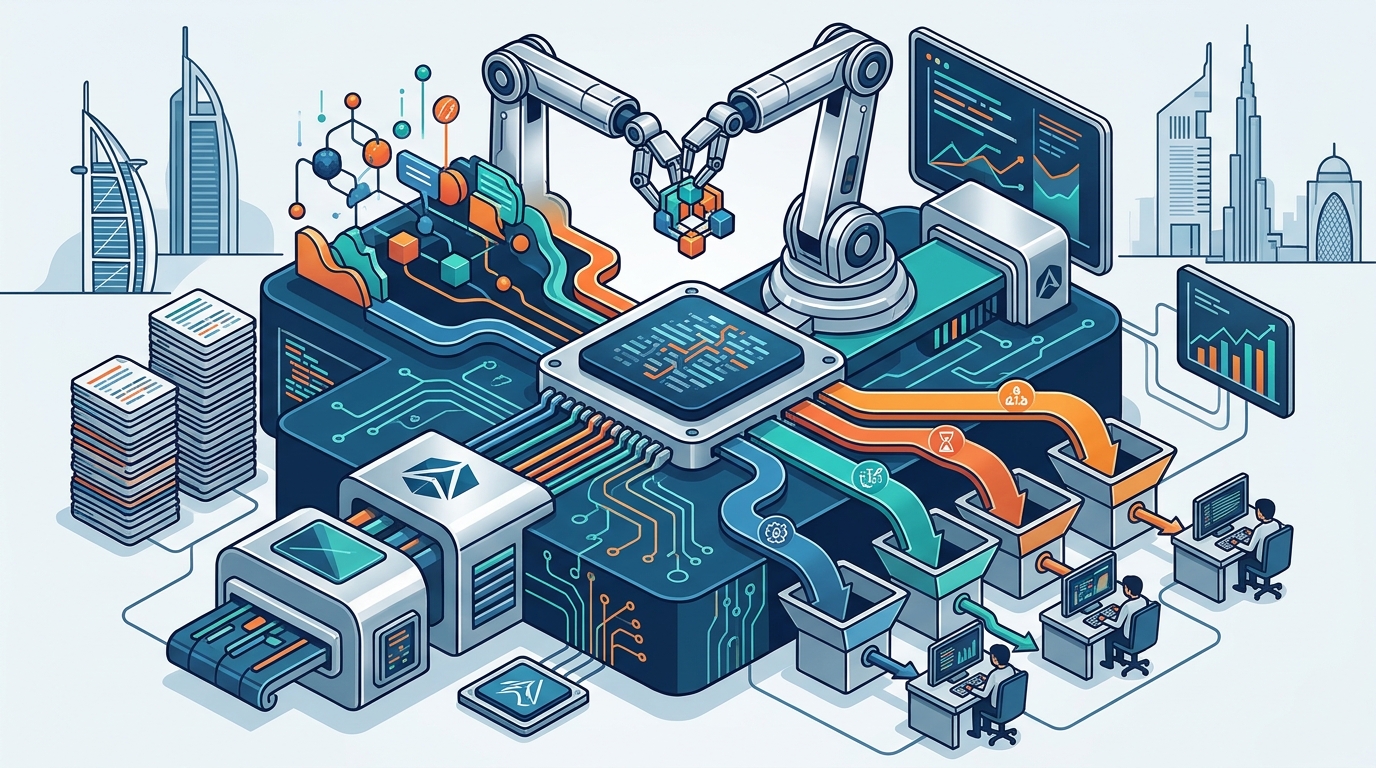
Categorization is only useful if it drives action. Each exception type must be mapped to a specific workflow or routing rule. For instance, 'data entry errors' might be routed to a data entry team for correction, while 'disputed charges' might be sent to a vendor management team for investigation.
Aetherix Systems ensures that categorization is tightly coupled with workflow automation. When an agent categorizes an exception, it also generates a recommended action and routes the item to the appropriate human reviewer. This seamless integration ensures that the categorization process directly contributes to faster resolution times and improved operational efficiency.
Key Takeaways
- AI reconciliation categorizes mismatches by analyzing data attributes, context, and historical patterns.
- Granular taxonomies prevent the 'unmatched' backlog by distinguishing between fee adjustments, timing differences, and true errors.
- Temporal analysis identifies cut-off issues and timing differences critical for period-end closing.
- Machine learning models detect anomalies and learn from past resolutions to improve routing accuracy.
- Effective categorization must be integrated with workflow routing to drive actionable outcomes.
Frequently Asked Questions
How does AI differ from rules-based exception categorization?
Rules-based systems use static logic to flag mismatches, often grouping them into broad categories. AI systems use dynamic analysis, including pattern recognition and contextual understanding, to assign more granular and accurate exception types.
What is a timing difference in reconciliation?
A timing difference is a discrepancy caused by a transaction being recorded in different accounting periods in two systems, such as a bank statement and a general ledger.
Can AI systems learn from past exception resolutions?
Yes, machine learning models can analyze historical data to identify patterns in how exceptions are resolved, allowing the system to improve its categorization and routing accuracy over time.
How does Aetherix Systems handle exception routing?
Aetherix Systems integrates categorization with workflow automation, ensuring that each exception type is routed to the appropriate team or individual with a recommended action.
What role does tolerance thresholds play in categorization?
Tolerance thresholds define acceptable variances for specific fields, such as amounts or dates. If a variance falls within the threshold, the system may categorize it as a minor adjustment rather than a significant error.
Conclusion
Effective exception categorization is the backbone of modern AI reconciliation. By moving beyond simple flagging to granular, context-aware classification, finance teams can streamline their workflows and improve accuracy. Aetherix Systems provides the engineering expertise to build and manage these systems, ensuring that your reconciliation process is both efficient and reliable. To explore how our AI agents can transform your reconciliation operations, contact Aetherix Systems. Learn more: aetherixsystems com.