

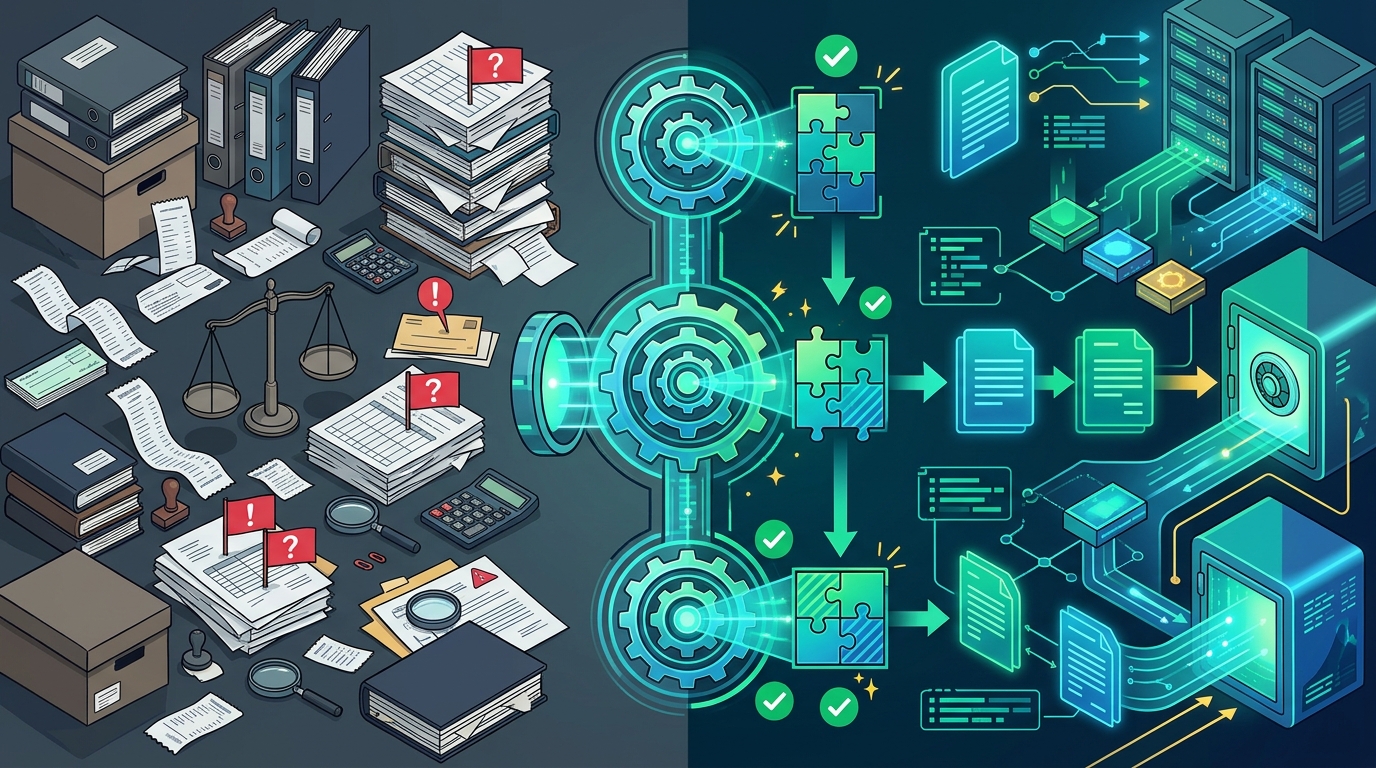
Modern reconciliation platforms differ from traditional accounting software by shifting from static, rules-based matching to dynamic, agentic investigation. While legacy systems flag discrepancies for human review, modern platforms use AI to autonomously analyze root causes and propose resolutions. This shift reduces manual effort and accelerates the close process for finance teams.
The Shift from Static Rules to Agentic Logic
Traditional accounting software relies on rigid, pre-defined rules to match transactions. If a transaction does not fit a specific rule, it is flagged as an exception. This approach is deterministic but brittle. It cannot adapt to new data patterns or complex, multi-step discrepancies without significant manual reconfiguration.
Modern reconciliation platforms utilize agentic workflows. An agentic workflow is a sequence of AI-driven actions where the system plans, executes, and verifies steps to achieve a goal. Instead of just flagging a mismatch, the AI agent investigates the discrepancy. It may query multiple data sources, check historical patterns, and identify the root cause. This moves the process from passive detection to active resolution.
The implication is a significant reduction in the cognitive load on finance staff. Employees spend less time hunting for errors and more time reviewing proposed solutions. The system handles the investigative labor, allowing humans to focus on judgment and approval.
Handling Complexity in High-Volume Environments
Legacy systems often struggle with high-volume, high-velocity data. When transaction counts rise, the number of exceptions grows exponentially. Traditional tools require users to process these exceptions one by one, leading to bottlenecks during month-end close.
Modern platforms are designed for scale. They process thousands of transactions in parallel. For example, a fund administrator managing multiple portfolios can reconcile all positions simultaneously. The platform groups similar exceptions and applies consistent logic across them. This parallel processing capability is a core differentiator from sequential, single-user legacy interfaces.
This scalability ensures that the close process remains predictable. Even as business volume increases, the time required to reconcile does not scale linearly with headcount. The system absorbs the complexity, maintaining operational stability.
Integration and Data Connectivity
Traditional accounting software often acts as a system of record but not a system of action. It stores data but requires manual entry or basic file imports to connect with external sources. This creates data silos and increases the risk of manual entry errors.
Modern reconciliation platforms are built on robust data integration layers. They connect directly to banks, custodians, and ERPs via APIs. This real-time connectivity ensures that the reconciliation engine works with live data. The platform can pull data from multiple sources, normalize it, and perform matching without human intervention.
The result is a single source of truth for reconciliation data. Finance teams no longer need to export, transform, and re-import data. The integration layer handles the plumbing, ensuring that the reconciliation reflects the current state of all connected systems.
Human Oversight and Audit Trails
A common misconception is that modern AI platforms operate without human oversight. In reality, human-in-the-loop design is a critical component. The AI proposes actions, but a named client employee reviews and approves them. This ensures accountability and compliance with internal controls.
Traditional software provides a log of user actions. Modern platforms provide a full audit trail of AI actions. Every step the agent takes, every data source it queries, and every decision it makes is recorded. This transparency is essential for regulatory compliance and internal audits.
Key Takeaways
- Modern platforms use agentic AI to investigate and propose resolutions, not just flag errors.
- Agentic workflows reduce manual effort by handling the investigative labor of reconciliation.
- Scalability is a key differentiator, allowing modern platforms to process high-volume data in parallel.
- Real-time API integrations eliminate manual data entry and reduce the risk of errors.
- Human-in-the-loop design ensures that AI proposals are reviewed and approved by qualified staff.
- Comprehensive audit trails provide transparency into every AI decision, supporting compliance.
Frequently Asked Questions
Do modern reconciliation platforms replace accountants?
No, they augment them. The platform handles the repetitive investigative work, allowing accountants to focus on higher-value tasks like analysis and strategy. Human oversight remains essential for final approval and judgment.
How does agentic AI differ from rules-based automation?
Rules-based automation follows fixed instructions. Agentic AI can plan and adapt its approach based on the data it encounters. It can investigate complex discrepancies that do not fit a simple rule set.
Is human approval required for AI-proposed resolutions?
Yes. In most enterprise environments, a human must review and approve any journal entry or resolution proposed by the AI. This ensures accountability and adherence to internal controls.
Can modern platforms integrate with legacy ERPs?
What is the role of the audit trail in modern reconciliation?
Conclusion
Modern reconciliation platforms represent a fundamental shift in how finance teams manage data. By leveraging agentic AI and robust integrations, they transform reconciliation from a manual, error-prone task into an automated, transparent process. Aetherix Systems builds these production AI systems for enterprise clients, ensuring that every action is backed by a full audit trail. To explore how these platforms can streamline your operations, visit our website. Learn more: Project not found.