

NAV teams create compliant audit documentation by capturing immutable logs of every AI decision, including the input data, the matching logic applied, and the final human approval. This ensures that when auditors review the Net Asset Value calculation, they can trace the exact path from raw custodian data to the final journal entry. Aetherix Systems builds these production AI systems to maintain a full audit trail on every action, ensuring that the automation process remains transparent and verifiable for regulatory scrutiny.
The Definition of an AI Audit Trail
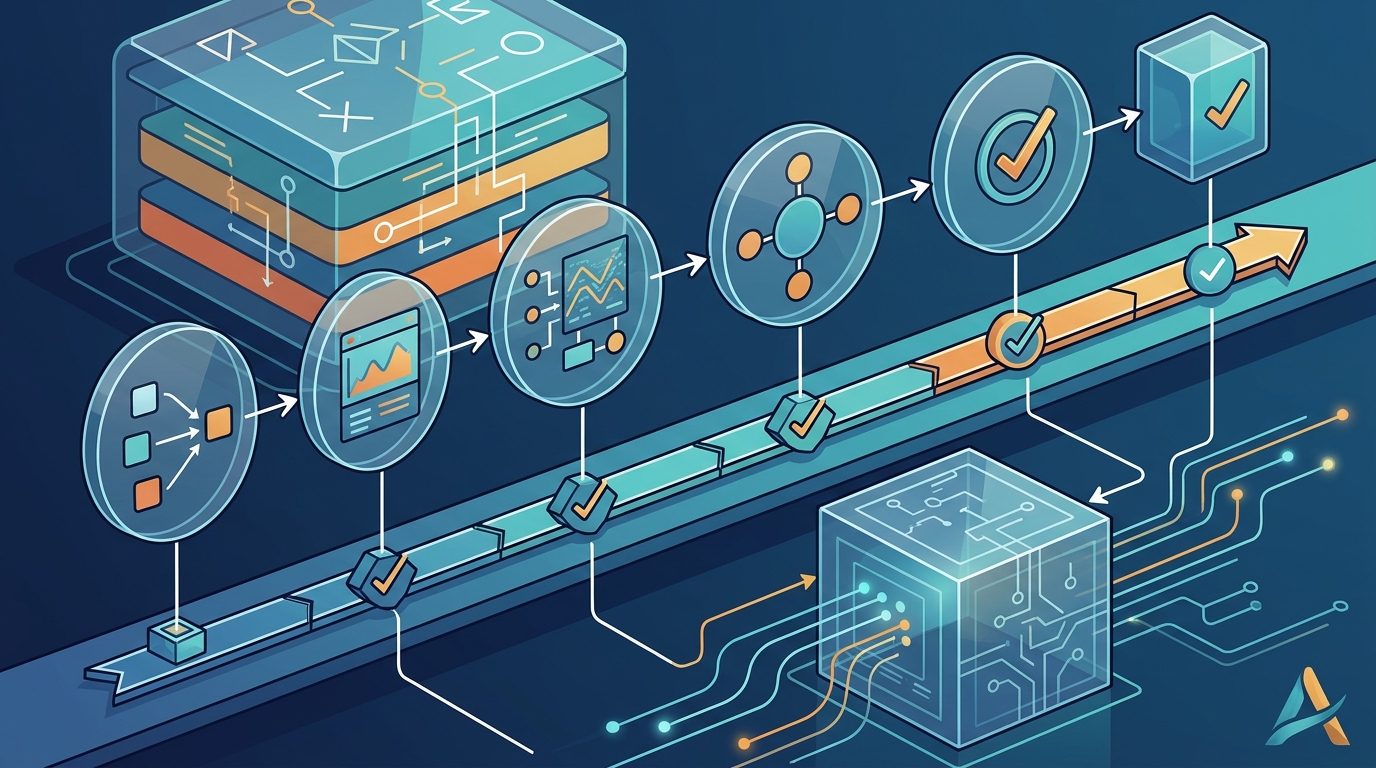
An AI audit trail is a chronological, immutable record of all inputs, processing steps, and outputs generated by an automated system. In the context of fund accounting, this trail must bridge the gap between raw data ingestion and the final financial statement. Traditional rules-based engines often log only the final match status, leaving a black box around how a specific record was categorized. Modern agentic systems, however, record the reasoning behind each decision. This distinction is critical for compliance. When an AI agent proposes a match, the system must log the specific fields compared, the confidence score assigned, and any exceptions flagged for human review.
Immutable Logging and Data Integrity
Compliance requires that audit logs cannot be altered after the fact. Aetherix Systems implements immutable logging standards to ensure that once a record is processed, its history is locked. This prevents any post-hoc modification of the matching logic or the resulting journal entries. For NAV teams, this means that if an auditor requests the state of the data at the time of the monthly close, the system can provide an exact snapshot. The integrity of this data is supported by our adherence to SOC 2 Type II and ISO 27001 standards, which mandate strict access controls and change management for all system logs. This level of data integrity is essential for passing external audits without extensive manual reconstruction of events.
Human-in-the-Loop Approval Workflows
Regulators require that a human is ultimately responsible for financial reporting. Therefore, AI systems should propose actions, but humans must approve them. Aetherix Systems designs workflows where AI agents handle the high-volume, low-complexity matching tasks, while a named client employee reviews and posts the resulting journal entries. This human-in-the-loop approach ensures that the final sign-off remains with a qualified individual. The audit documentation must clearly distinguish between the AI's proposal and the human's approval. By capturing the timestamp of the human approval and the identity of the approver, the team creates a clear chain of custody. This separation of duties is a fundamental requirement for internal controls in financial institutions.
Mapping AI Decisions to Regulatory Standards
Practical Implementation for Fund Administrators
Key Takeaways
- An AI audit trail is an immutable record of inputs, logic, and outputs that ensures transparency in automated matching.
- Immutable logging prevents post-hoc alterations, ensuring data integrity for external audits.
- Human-in-the-loop workflows are essential for regulatory compliance, as humans must approve final journal entries.
- Mapping AI decisions to standards like ISO 42001 helps demonstrate controlled and ethical AI usage.
- Automated documentation reduces the manual burden on finance teams and improves efficiency.
- Aetherix Systems provides production AI systems with full audit trails for NAV and reconciliation operations.
Frequently Asked Questions
What is the primary purpose of an AI audit trail in fund accounting?
The primary purpose is to provide a transparent and verifiable record of how automated systems process financial data. This allows auditors to trace the path from raw data to final financial statements, ensuring that the automation process is controlled and compliant.
How does Aetherix Systems ensure the integrity of audit logs?
Is human approval required for AI-generated journal entries?
Yes, regulatory frameworks generally require that a human is ultimately responsible for financial reporting. Aetherix Systems designs workflows where AI agents propose actions, but a named client employee must review and approve the final journal entries.
What standards does Aetherix Systems align with for AI governance?
Aetherix Systems aligns its AI governance with ISO 42001 principles and operates to SOC 2 Type II and ISO 27001 standards. These frameworks ensure that AI systems are developed and deployed with a focus on risk management, security, and ethical considerations.
Can AI systems fully replace human auditors?
No, AI systems are designed to assist and augment human auditors and finance teams. They handle high-volume, repetitive tasks and provide detailed documentation, but humans remain responsible for final judgment, sign-off, and regulatory compliance.
Conclusion
Creating compliant audit documentation for AI-driven record matching requires a focus on transparency, immutability, and human oversight. By implementing immutable logs and clear approval workflows, NAV teams can ensure that their automation processes meet regulatory standards. Aetherix Systems provides the infrastructure and expertise to build these systems, ensuring that every action is documented and verifiable. To discuss how your team can implement compliant AI audit trails, contact Aetherix Systems. Learn more: Project not found.