

Choosing an AI reconciliation agent requires looking beyond basic matching capabilities. For family offices and fund administrators, the value lies in how the system investigates exceptions and maintains a clear audit trail. Aetherix Systems builds these agents to handle the complex breaks that standard software leaves behind.
1. Exception Investigation Capability
The agent must investigate the root cause, not just flag the difference. Most standard tools auto-match clean items but fail when data does not align. A useful agent pulls source documents, traces the discrepancy, and proposes a resolution. This moves the work from a manual queue to a reviewable list.
2. Full Reasoning Trace
Every decision must be auditable with a complete reasoning trace. An AI reconciliation agent is a system that explains its own actions. If the agent proposes a journal entry, it must show the data it read and the logic it applied. This transparency is critical for internal audit and regulatory inquiries.
3. Human Posting Controls
The agent should propose entries, but a named human must post them. Autonomy is useful, but control is essential. The system should not have implicit write access to the general ledger. Instead, it should route proposed resolutions to an authorized employee for final approval. This ensures accountability remains with the client team.
4. Multi-System Integration
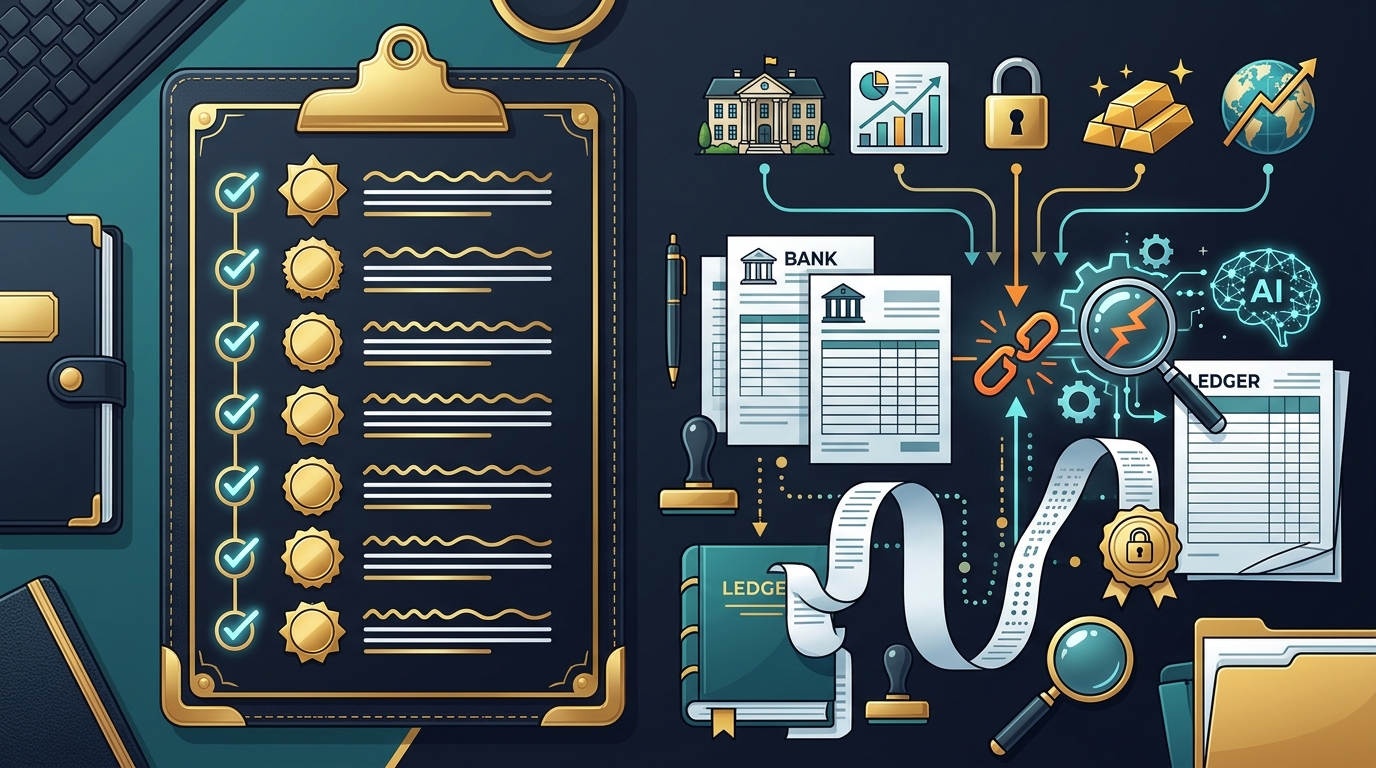
The agent must connect to your specific ERP and custodian systems. Reconciliation breaks often happen between different platforms. The agent needs to pull data from your ERP, bank statements, and custodian reports. It should normalize these different formats into a single view for comparison.
5. Configurable Tolerance Rules
The system must respect your specific financial thresholds. Not all variances are equal. The agent should allow you to set tolerance levels for price differences or timing gaps. Items within tolerance can be auto-resolved, while items above the threshold should escalate for human review. This prevents the agent from guessing on material breaks.
6. Compliance and Data Residency
Data protection and AI governance must be built into the architecture. The provider should maintain compliance with global data protection regulations. This includes clear data residency options and security standards. For family offices, knowing where your data is stored and how it is protected is a non-negotiable requirement.
7. Operational Transparency
The system must report on its own performance and failures. A reliable agent does not fail silently. It should provide dashboards showing activity, exception rates, and resolution accuracy. If a run resolves nothing, it should still report that fact. This allows your team to monitor the health of the reconciliation process in real time.
Choosing the Right Partner
When evaluating these criteria, look for a partner that treats reconciliation as an operation, not just a software license. Aetherix Systems runs these agents as a managed service, ensuring that the workflow, controls, and human oversight are aligned with your specific close calendar. To see how these criteria apply to your current systems, review our delivery model.
Frequently Asked Questions
What is an AI reconciliation agent?
An AI reconciliation agent is an automated system that compares financial records across different sources, investigates discrepancies, and proposes resolutions. It uses reasoning to understand why a break occurred, rather than just flagging that a difference exists.
Can AI agents post journal entries directly?
In a controlled environment, AI agents should not post entries directly. They should propose the entry with full reasoning, and a named human employee should review and post it. This maintains human accountability for the final financial record.
How does Aetherix Systems handle exceptions?
Aetherix Systems agents investigate the root cause of exceptions by pulling source documents and tracing the data. They classify the break and propose a supported resolution. Items outside agreed tolerances are escalated to the client team for review.
What systems do these agents integrate with?
These agents integrate with major ERP systems and custodian platforms. They connect to your existing systems of record to pull data for comparison. The specific integrations depend on your current technology stack and are configured during the scoping phase.
Is the AI reconciliation process auditable?
Yes, the process is designed to be fully auditable. Every action the agent takes carries a reasoning trace and references to the source documents it read. This allows auditors to verify why a specific resolution was proposed.
Next Steps
If your team is ready to move beyond manual exception handling, start by mapping your current reconciliation workflow. Identify where the breaks occur and how long they take to resolve. Aetherix Systems can help you scope this process and define the right controls for your operation. To discuss your specific workflow, contact our team.