

AI tools that reconcile accounts across multiple custodians are specialized agentic systems that ingest data from various custodian portals, normalize formats, and investigate discrepancies automatically. Aetherix Systems builds these systems to handle the complex exception queues that arise in multi-custodian environments. This guide covers how AI matching engines work, the specific challenges of multi-custodian reconciliation, and how to evaluate tools for your operational needs.
AI Matching Engines
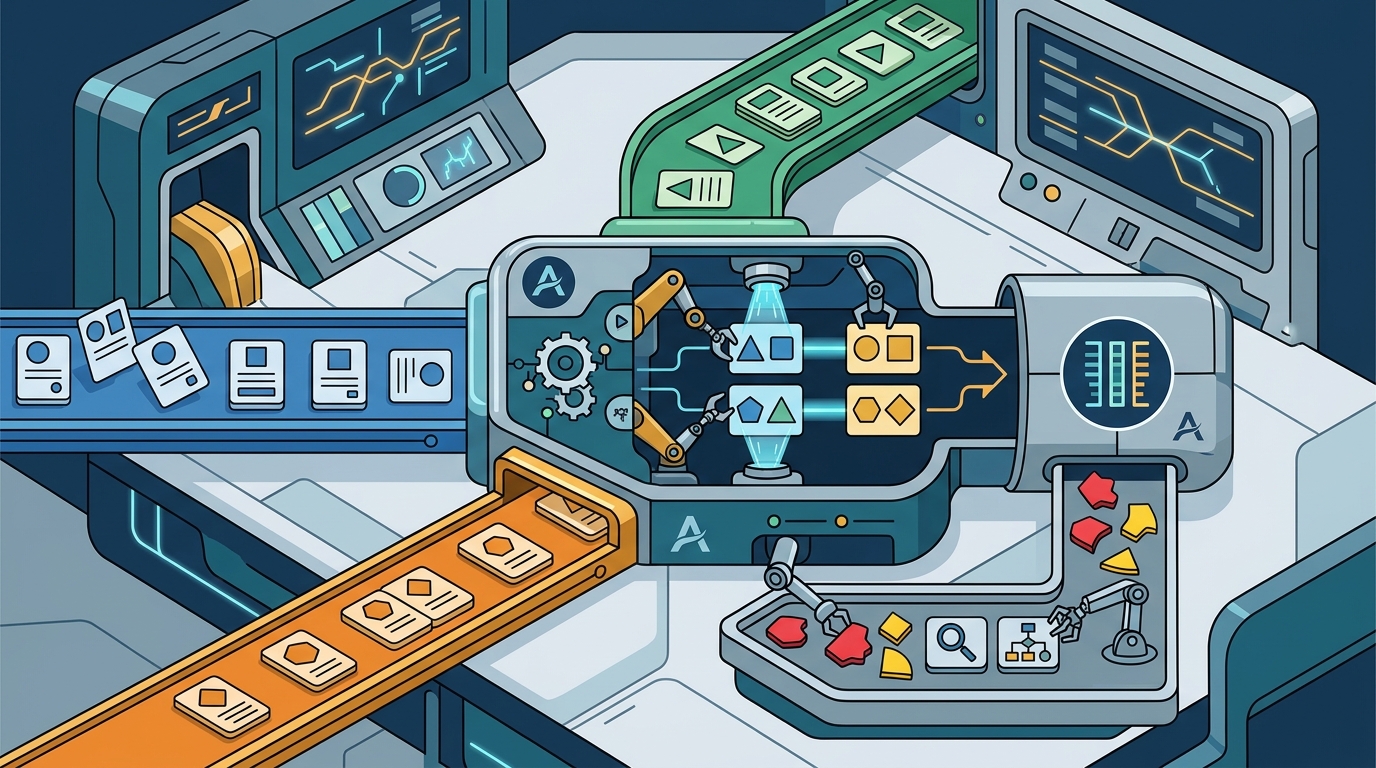
AI matching engines are software systems that use machine learning and rule-based logic to compare financial records across different sources. In a multi-custodian environment, these engines must handle diverse data formats, including PDFs, EDI files, and API feeds. Traditional rules-based engines often struggle with the variability in custodian reporting, leading to high exception rates. Agentic AI systems go beyond simple matching by investigating the root cause of breaks and proposing resolutions.
From Matching to Investigation
Standard matching engines flag items that do not agree within a defined tolerance. However, they do not explain why the items differ. Agentic systems, like those developed by Aetherix Systems, pull supporting documentation, trace transactions through the system, and classify the exception type. This shift from flagging to investigating significantly reduces the manual effort required to close the books.
Handling Data Normalization
Each custodian uses different naming conventions, currency formats, and settlement cycles. AI tools must normalize this data before matching can occur. This involves mapping instrument identifiers, standardizing dates, and converting currencies to a common reporting base. Without robust normalization, even accurate matching logic will produce false positives.
Multi-Custodian Challenges
Reconciling accounts across multiple custodians introduces complexity that single-custodian environments do not face. The primary challenge is the multiplicative nature of the reconciliation matrix. If a fund holds assets with five custodians, the system must reconcile positions, trades, cash, and corporate actions for each custodian against the internal book of record. This creates a large volume of data that must be processed daily or monthly.
Corporate Actions and Settlement Timing
Corporate actions, such as dividends, splits, and mergers, often occur on different dates across custodians. Settlement timing differences, such as T+1 versus T+2, can cause temporary breaks that resolve themselves but require tracking. AI tools must distinguish between genuine errors and timing differences that will self-clear. This requires understanding the settlement calendar and the specific rules of each custodian.
Multi-Currency and FX Translation
Global portfolios often hold assets in multiple currencies. Reconciliation requires translating these assets to the fund's reporting currency using the correct exchange rates. FX rate discrepancies between custodians and internal systems are a common source of breaks. AI tools must trace these variances back to the rate source and posting date to determine if they are material.
Evaluation Criteria
When selecting an AI tool for multi-custodian reconciliation, organizations should evaluate several key criteria. These criteria determine whether the tool can handle the specific complexity of your portfolio and operational workflow. The following table summarizes the most important factors to consider.
| Criteria | Description | Why It Matters |
|---|---|---|
| Exception Resolution | Ability to investigate and propose resolutions for breaks | Reduces manual analyst time and accelerates close |
| Audit Trail | Complete logging of every action and decision | Ensures compliance and provides evidence for auditors |
| Integration Capability | Support for APIs, EDI, and file-based data ingestion | Ensures compatibility with existing custodian and ERP systems |
| Tolerance Configuration | Ability to set custom thresholds per account or asset class | Prevents false positives and focuses attention on material breaks |
| Security and Compliance | Adherence to SOC 2, ISO 27001, and data residency requirements | Protects sensitive financial data and meets regulatory standards |
Human-in-the-Loop Controls
AI tools should include human-in-the-loop controls that allow users to review and approve proposed resolutions. This ensures that the system does not take untraceable actions or post entries without authorization. Aetherix Systems implements hard constraints that prevent agents from writing to the ledger or closing periods without human sign-off.
Scalability and Performance
The tool must scale with the volume of transactions and the number of custodians. As portfolios grow, the reconciliation matrix expands. AI systems should be able to process large datasets in parallel, reducing the time required to complete the reconciliation cycle. Performance metrics, such as processing time and exception resolution rate, should be monitored continuously.
Implementation
Implementing an AI reconciliation tool requires a structured approach to ensure a smooth transition from manual processes. The implementation typically involves scoping, configuration, a shadow period, and production deployment. Each phase has specific objectives and deliverables that must be met before moving to the next.
Scoping and Data Connectivity
The first step is to map the existing systems, data sources, and exception types. This involves identifying all custodians, asset classes, and reporting requirements. Data connectivity is established by connecting to custodian feeds, bank statements, and ledger exports. No migration is required; the tool works with whatever format is currently in use.
Shadow Period and Tuning
During the shadow period, the AI agents run in parallel with the existing manual process. Every proposed resolution is reviewed by the team before action is taken. This allows the team to tune the matching rules and tolerance thresholds based on feedback. The goal is to achieve a high resolution accuracy before moving to production.
Production Deployment
Once the shadow period is complete, the agents begin handling production work. The team receives clean reconciliations, resolved exceptions with reasoning attached, and consolidated reports on their schedule. The transition to production should be non-disruptive to existing workflows, allowing the team to focus on higher-value analysis rather than data wrangling.
Key Takeaways
- AI matching engines are essential for handling the volume and complexity of multi-custodian reconciliation.
- Agentic systems go beyond matching by investigating breaks and proposing resolutions.
- Multi-custodian environments introduce challenges related to corporate actions, settlement timing, and FX translation.
- Evaluation criteria should include exception resolution, audit trail, integration capability, and security.
- Human-in-the-loop controls are critical for maintaining oversight and compliance.
- Implementation requires a structured approach involving scoping, configuration, shadow period, and production deployment.
- Aetherix Systems provides AI agents that run reconciliation operations with a full audit trail on every action.
Frequently Asked Questions
What is the difference between a matching engine and an agentic AI system?
A matching engine compares records and flags discrepancies, while an agentic AI system investigates the root cause of those discrepancies and proposes resolutions. Agentic systems reduce the manual effort required to close the books by handling the exception queue.
How do AI tools handle multi-currency reconciliation?
AI tools normalize data by converting assets to a common reporting currency using the correct exchange rates. They trace FX variances back to the rate source and posting date to determine if they are material or timing differences.
Can AI tools integrate with existing ERP systems?
Yes, AI tools can integrate with existing ERP systems via APIs, EDI, or file-based data ingestion. This ensures compatibility with current workflows and reduces the need for migration.
What is a shadow period in AI implementation?
A shadow period is a phase where AI agents run in parallel with the existing manual process. Proposed resolutions are reviewed by the team before action is taken, allowing for tuning and validation before production deployment.
How does Aetherix Systems ensure audit compliance?
Aetherix Systems implements a full audit trail on every action, logging what data was compared, what logic was applied, and why the conclusion was reached. This provides evidence for auditors and ensures compliance with regulatory standards.
What are the main challenges of multi-custodian reconciliation?
The main challenges include handling diverse data formats, corporate actions, settlement timing differences, and multi-currency translation. These challenges require robust normalization and investigation capabilities.
Conclusion
Selecting the right AI tool for multi-custodian reconciliation requires careful evaluation of matching capabilities, exception resolution, and integration options. Aetherix Systems provides agentic AI solutions that investigate breaks, apply tolerance rules, and deliver a clean close with a full audit trail. To explore how our agents can streamline your reconciliation operations, .