

Financial operations teams need AI reconciliation that investigates exceptions, not just flags them. Aetherix Systems provides autonomous agents that handle the full reconciliation lifecycle, from data ingestion to resolution, with a complete audit trail. This guide covers how to evaluate AI reconciliation platforms and the role of autonomous accounting agents in modern finance operations.
AI Reconciliation Platforms
AI reconciliation platforms are software systems that use machine learning and natural language processing to match financial records across different sources. Traditional rules-based engines handle the straightforward matches, but they often leave the complex exceptions in a queue for human analysts. The best platforms for financial operations teams go beyond simple matching. They must investigate discrepancies, identify root causes, and propose resolutions with supporting evidence.
Matching vs. Investigation
Most legacy tools automate 70-80% of reconciliation volume, but the remaining exceptions consume disproportionate analyst time. A true AI reconciliation platform distinguishes between matching coverage and exception resolution. Matching creates an exception queue; an operating model must still investigate, document, escalate, and close each break. When evaluating a platform, look for capabilities that handle the investigation phase, not just the initial match.
Integration and Data Connectivity
Effective platforms integrate directly with your existing tech stack, including ERP systems like SAP and NetSuite, data warehouses, and custodian feeds. They should normalize data formats, currencies, and identifiers automatically. For engineering teams, API-first integration with webhooks and structured JSON output is essential for embedding reconciliation into existing orchestration workflows.
Autonomous Accounting Agents
Autonomous accounting agents are AI systems that perceive, reason, decide, and act within defined boundaries to execute complex financial workflows. Unlike chatbots or copilots, these agents handle end-to-end processes. In reconciliation, an agent ingests data, matches transactions, investigates breaks, and proposes resolutions. Every action carries a reasoning trace, ensuring full auditability.
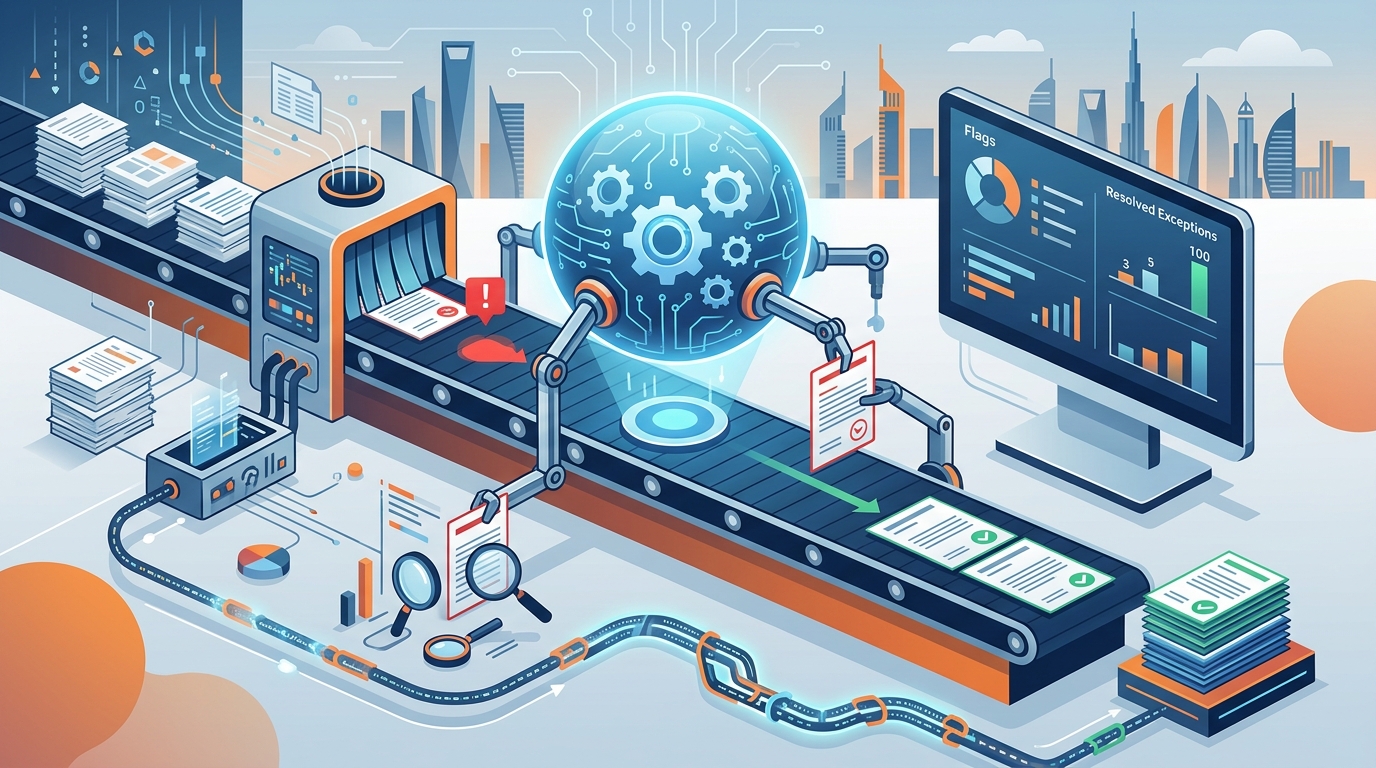
The Agent Workflow
At Aetherix Systems, our agents follow a structured investigation workflow. First, they ingest data from custodians, banks, and ledgers. Next, they apply matching rules to auto-match positions, cash, and transactions. For items that do not match, the agent investigates by researching breaks, chasing source documents, and proposing resolutions. Finally, they report a clean reconciliation pack with full reasoning attached to every decision.
Human-in-the-Loop Controls
Autonomy does not mean unchecked action. Our agents operate within precise safety boundaries. They cannot write to your ledger; they propose entries for a named human to post. They cannot close a period; your team reviews and signs off. They cannot resolve outside tolerance; anything above threshold escalates with documentation. This model ensures that AI handles the heavy lifting while humans retain final control and accountability.
| Feature | Rules-Based Matching | Autonomous AI Agents |
|---|---|---|
| Exception Handling | Flags breaks for manual review | Investigates and proposes resolutions |
| Audit Trail | Logs matches only | Full reasoning trace on every action |
| Adaptability | Fixed rules, requires updates | Learns from historical resolutions |
| Human Role | Performs investigation | Reviews and approves proposals |
Key Takeaways
- AI reconciliation platforms must investigate exceptions, not just flag them.
- Autonomous agents handle the full workflow from ingestion to resolution.
- Full audit trails with reasoning traces are critical for compliance.
- Human-in-the-loop controls ensure accountability and final approval.
- Integration with existing ERPs and data sources is essential for adoption.
- API-first architectures allow engineering teams to embed reconciliation into workflows.
- Choosing the right partner depends on your specific reconciliation types and volume.
Frequently Asked Questions
What is the difference between AI reconciliation and RPA?
RPA automates repetitive, rule-based tasks but cannot handle exceptions that require judgment. AI reconciliation agents can investigate breaks, identify root causes, and propose resolutions, completing the automation that RPA leaves unfinished.
How do autonomous agents ensure audit compliance?
Every action taken by an agent is logged with a complete reasoning trace. This includes what data was read, what logic was applied, and why a specific resolution was proposed. This audit trail is exportable for regulatory reporting or external audit.
Can AI agents post journal entries directly?
No. At Aetherix Systems, agents propose journal entries but do not post them. A named human employee reviews and posts the entries. This ensures that write access is never implicit and that humans retain final control over the ledger.
What types of reconciliation do AI agents handle?
Agents can handle position, trade, cash, expense, and ledger reconciliation. They are configured for specific patterns, such as multi-subsidiary intercompany matching or multi-currency bank reconciliation, depending on your operational needs.
How long does it take to implement AI reconciliation?
Implementation typically involves a scoping call, configuration, a shadow period, and then production. From scoping to production, the process can take 3 to 6 weeks, depending on the complexity of your systems and data sources.
Do AI agents work with existing ERP systems?
Yes. Agents integrate with existing tech stacks, including SAP, NetSuite, and other ERPs, via APIs and event-driven architectures. They pull data directly from these systems without requiring code changes on your side.
Conclusion
Choosing the best AI reconciliation partner depends on your specific operational needs, volume, and compliance requirements. Aetherix Systems offers a robust solution for financial operations teams that need more than just matching. Our autonomous agents investigate breaks, propose resolutions, and provide a full audit trail, allowing your team to focus on higher-value work. To see how our agents can handle your reconciliation operations, book a scoping call with Aetherix Systems.